
The best hiking routes in Riserva Naturale Lucciola Bella
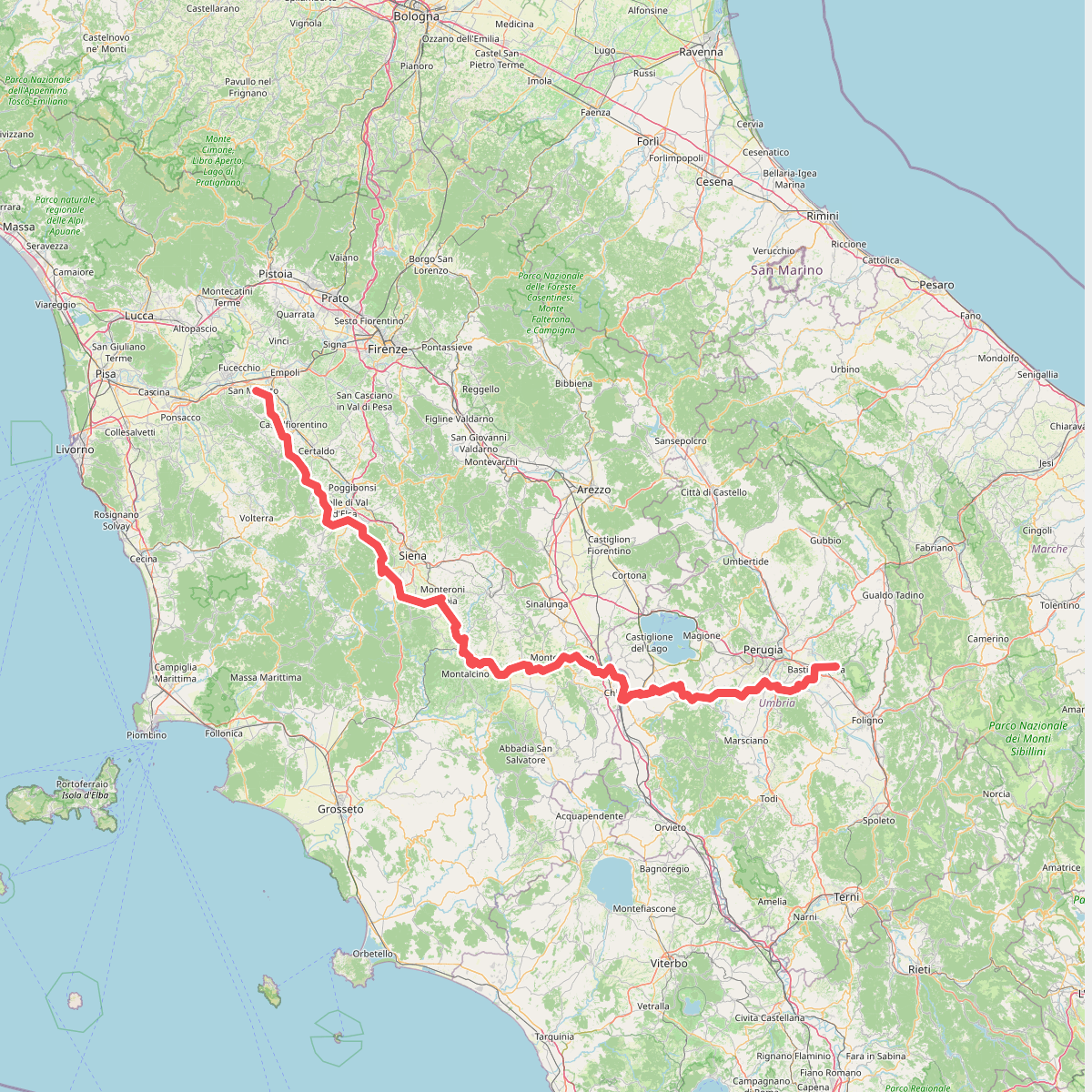
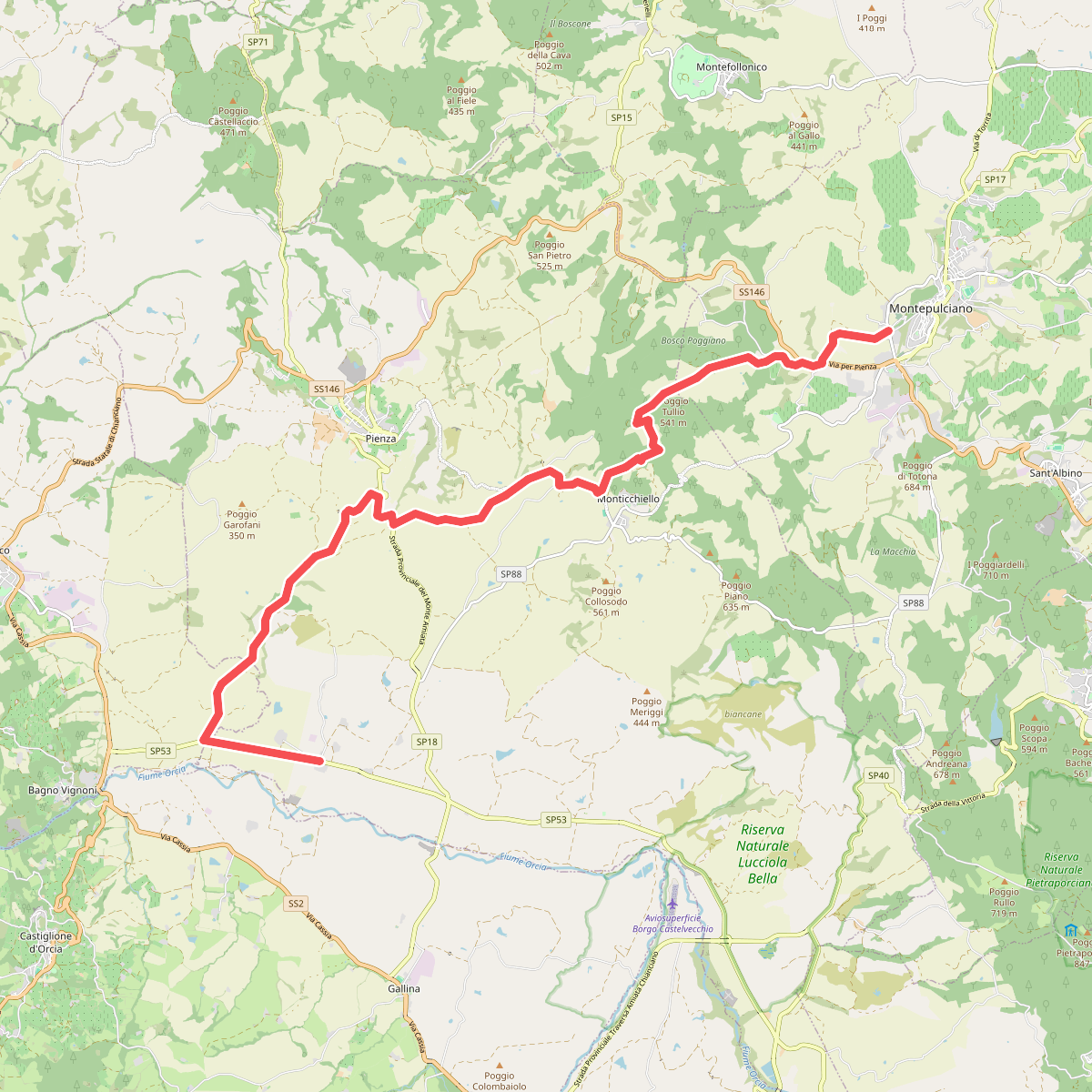
Discover the best walks in Riserva Naturale Lucciola Bella. 2 routes on the map, with descriptions, photos and GPX.
About Riserva Naturale Lucciola Bella
Riserva Naturale Lucciola Bella offers a walk through the stark, eroded clay landscapes of the Val d'Orcia, characterized by greyish-white ridges known as calanchi and dome-shaped clay hills called biancane. Unlike the nearby cultivated wheat fields and cypress-lined avenues of southern Tuscany, this reserve preserves a rugged, semi-arid terrain where vegetation is sparse and adapted to salty soils. The paths here are mostly unpaved dirt tracks and clay trails that follow the natural contours of the ridges, offering a direct encounter with the raw, furrowed earth.
Read more
About Riserva Naturale Lucciola Bella
Riserva Naturale Lucciola Bella offers a walk through the stark, eroded clay landscapes of the Val d'Orcia, characterized by greyish-white ridges known as calanchi and dome-shaped clay hills called biancane. Unlike the nearby cultivated wheat fields and cypress-lined avenues of southern Tuscany, this reserve preserves a rugged, semi-arid terrain where vegetation is sparse and adapted to salty soils. The paths here are mostly unpaved dirt tracks and clay trails that follow the natural contours of the ridges, offering a direct encounter with the raw, furrowed earth.
Read moreRiserva Naturale Lucciola Bella offers a walk through the stark, eroded clay landscapes of the Val d'Orcia, characterized by greyish-white ridges known as calanchi and dome-shaped clay hills called biancane. Unlike the nearby cultivated wheat fields and cypress-lined avenues of southern Tuscany, this reserve preserves a rugged, semi-arid terrain where vegetation is sparse and adapted to salty soils. The paths here are mostly unpaved dirt tracks and clay trails that follow the natural contours of the ridges, offering a direct encounter with the raw, furrowed earth.
Walking through this reserve means navigating a landscape shaped by centuries of water erosion on marine clays. Underfoot, the ground consists of compacted clay that becomes sticky and heavy when wet, and cracks into hard, dusty fissures during the dry summer months. The vegetation is dominated by low shrubs, wild wormwood, and hardy grasses, meaning there is virtually no tree canopy or shade along the paths. It is a stark contrast to the lush, forested hills found in other parts of the region.
In late spring, particularly around May, the grey clay slopes are briefly punctuated by the yellow blooms of wild broom, which provides a vivid contrast to the pale, bare earth. The reserve is generally quieter than the famous viewpoints along the main valley roads, making it a suitable choice for walkers who prefer a solitary, quiet experience focused on geology rather than manicured estate gardens. There are no boardwalks or visitor centers, so the walk remains a straightforward, rustic trek across exposed ridges and gullies.