
The best hiking routes in Přírodní park Valcha
Discover the best walks in Přírodní park Valcha. 3 routes on the map, with descriptions, photos and GPX.
About Přírodní park Valcha
Přírodní park Valcha is a small, quiet nature park in the western part of the Czech Republic, characterized by its damp, low-lying basin landscape. Unlike the rugged granite peaks found in nearby border ranges, this area is defined by a gentle, shallow depression where water naturally collects. The terrain is a mixture of damp pine forests, waterlogged meadows, and small ponds connected by narrow streams. It is a landscape shaped by water retention, where the transition from dry pine needles to squelchy peat underfoot can happen within a few paces.
Read more
About Přírodní park Valcha
Přírodní park Valcha is a small, quiet nature park in the western part of the Czech Republic, characterized by its damp, low-lying basin landscape. Unlike the rugged granite peaks found in nearby border ranges, this area is defined by a gentle, shallow depression where water naturally collects. The terrain is a mixture of damp pine forests, waterlogged meadows, and small ponds connected by narrow streams. It is a landscape shaped by water retention, where the transition from dry pine needles to squelchy peat underfoot can happen within a few paces.
Read morePřírodní park Valcha is a small, quiet nature park in the western part of the Czech Republic, characterized by its damp, low-lying basin landscape. Unlike the rugged granite peaks found in nearby border ranges, this area is defined by a gentle, shallow depression where water naturally collects. The terrain is a mixture of damp pine forests, waterlogged meadows, and small ponds connected by narrow streams. It is a landscape shaped by water retention, where the transition from dry pine needles to squelchy peat underfoot can happen within a few paces.
Walking here means navigating a network of unpaved forest tracks and grassy paths that can be soft and damp, especially near the central watercourses. The forest floor is covered with blueberry bushes and moss, which thrive in the acidic soil of this basin. You will notice that the trees are smaller and more stunted in the wettest sections, opening up into marshy clearings, while slightly higher, sandy banks support taller, mature Scots pines.
This park is best suited for those who prefer flat, slow-paced exploration over demanding hill climbs. There are no dramatic viewpoints or deep rocky gorges here. Instead, the appeal lies in the subtle shifts between damp woodland and open, marshy meadows. In late summer, around August, the heather patches on the drier sandy rises provide a brief purple contrast to the otherwise green and brown tones of the forest.
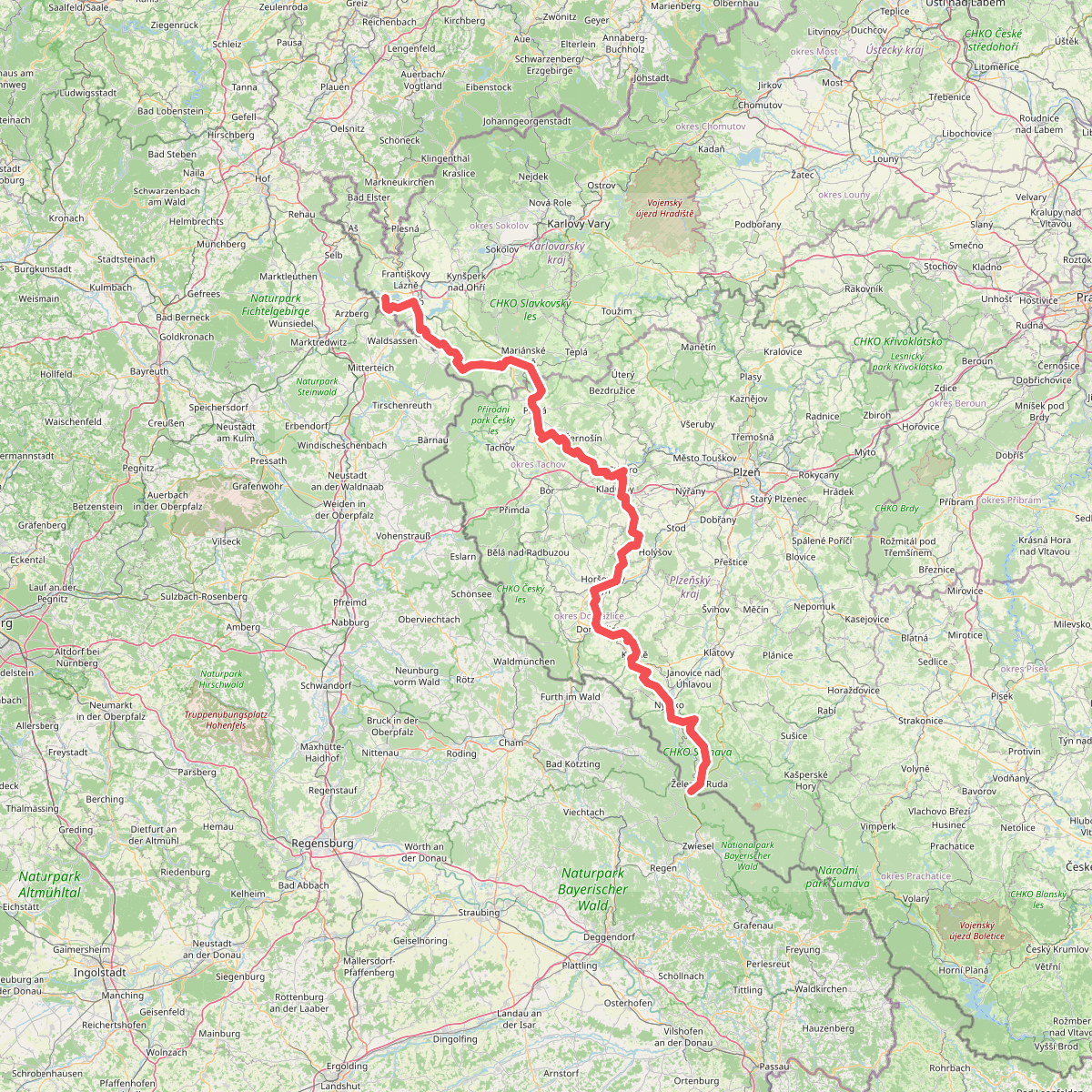
![[M] Rozvadov - Valtířov](https://wandelweb.fsn1.your-objectstorage.com/tracks/static-maps/35361-1779134174-large.png)
![[Ž] Okružní trasa Sycherák](https://wandelweb.fsn1.your-objectstorage.com/tracks/static-maps/35563-1779134278-large.png)