
The best hiking routes in Parque Natural da Serra da Enciña da Lastra
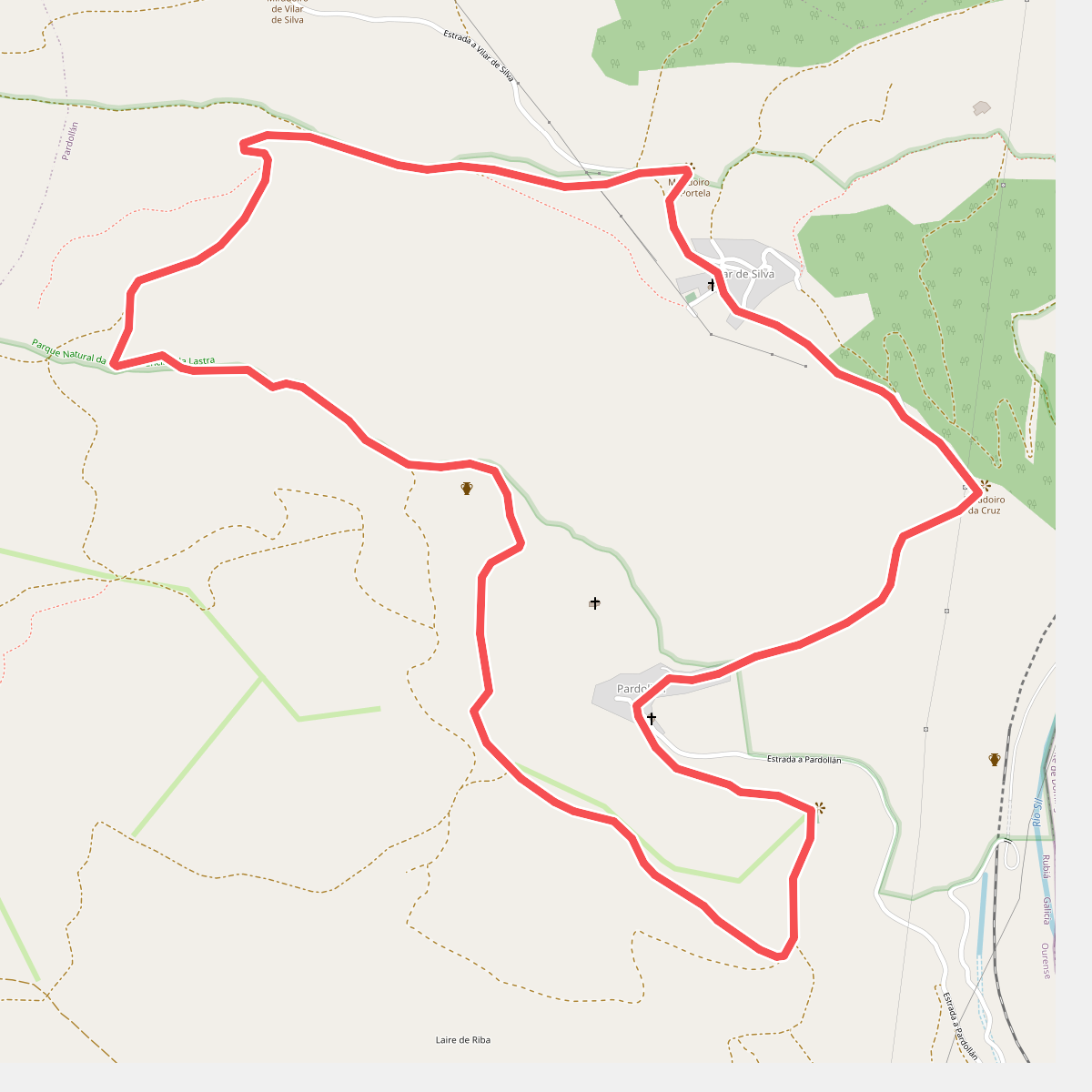
Discover the best walks in Parque Natural da Serra da Enciña da Lastra. 1 routes on the map, with descriptions, photos and GPX.
Managed by Xunta de Galicia
About Parque Natural da Serra da Enciña da Lastra
Parque Natural da Serra da Enciña da Lastra stands out from the rest of Galicia due to its Mediterranean microclimate and limestone geology, which contrast sharply with the surrounding acidic granite hills. This limestone foundation creates a dry, pale gray landscape of steep cliffs, deep canyons, and extensive cave networks known locally as palas. The vegetation is dominated by dense holm oak forests, wild olive trees, and aromatic herbs, giving walkers the impression of being in a southern, arid climate rather than the wet northwest of Spain.
Read more
About Parque Natural da Serra da Enciña da Lastra
Parque Natural da Serra da Enciña da Lastra stands out from the rest of Galicia due to its Mediterranean microclimate and limestone geology, which contrast sharply with the surrounding acidic granite hills. This limestone foundation creates a dry, pale gray landscape of steep cliffs, deep canyons, and extensive cave networks known locally as palas. The vegetation is dominated by dense holm oak forests, wild olive trees, and aromatic herbs, giving walkers the impression of being in a southern, arid climate rather than the wet northwest of Spain.
Read moreParque Natural da Serra da Enciña da Lastra stands out from the rest of Galicia due to its Mediterranean microclimate and limestone geology, which contrast sharply with the surrounding acidic granite hills. This limestone foundation creates a dry, pale gray landscape of steep cliffs, deep canyons, and extensive cave networks known locally as palas. The vegetation is dominated by dense holm oak forests, wild olive trees, and aromatic herbs, giving walkers the impression of being in a southern, arid climate rather than the wet northwest of Spain.
Walking here involves navigating steep, rocky paths, loose limestone scree, and narrow dirt tracks that wind through the scrub. The terrain is rugged and uneven, requiring sturdy footwear to handle the sharp stones and occasional steep ascents. Unlike the lush, grassy valleys typical of Galicia, the underfoot conditions here are dry and stony, with paths often bordered by sheer rock faces and low, prickly Mediterranean shrubs.
In April and May, the limestone slopes become a key feature of the park as numerous wild orchid species bloom along the trail margins. Walkers should expect a landscape defined by its karst topography, where water disappears quickly underground, leaving the surface dry. This is not a place for gentle, flat meadow strolls or deep pine forests, but rather a rugged, sun-baked limestone ridge that offers a distinct botanical and geological experience.