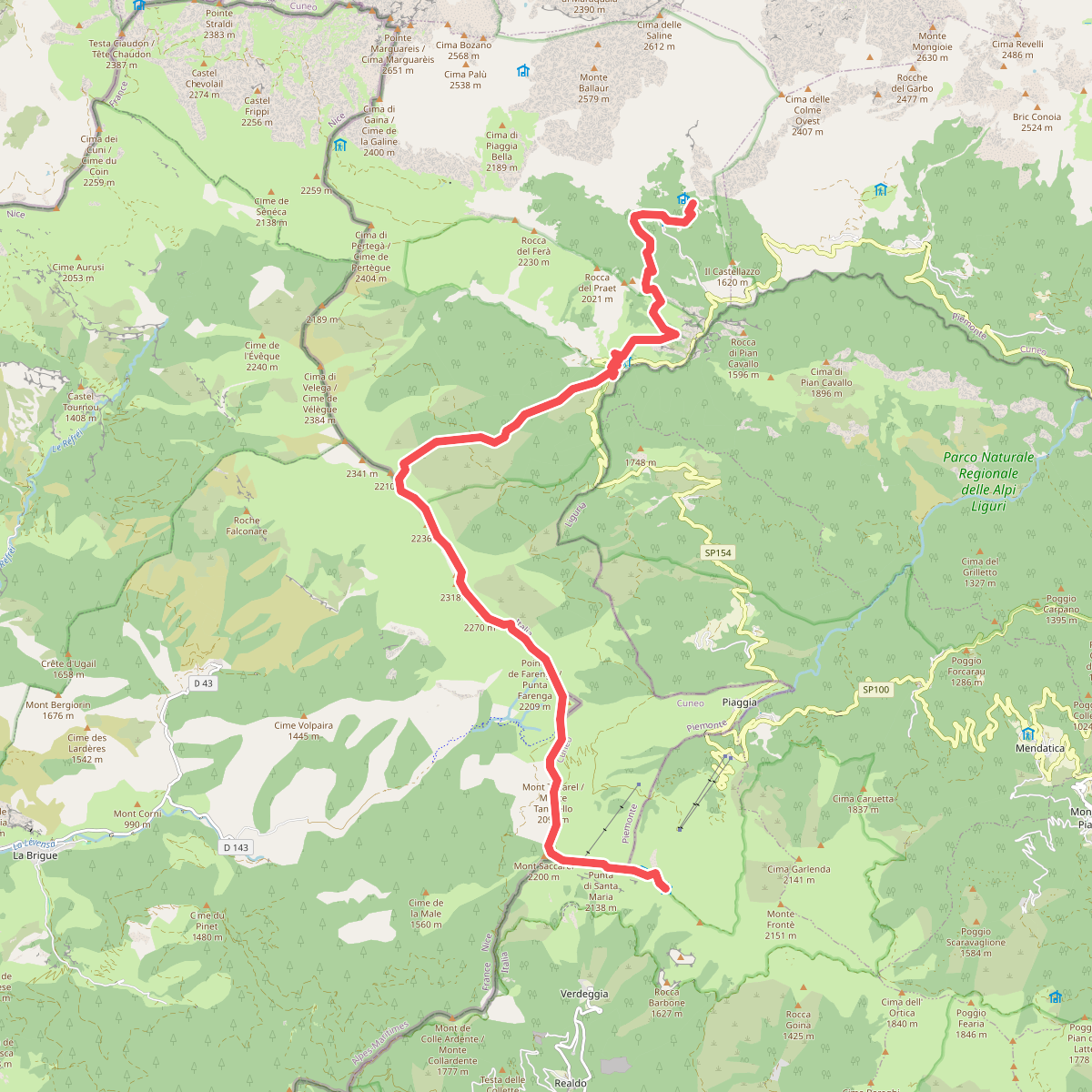

The best hiking routes in Parco Naturale del Marguareis
Discover the best walks in Parco Naturale del Marguareis. 5 routes on the map, with descriptions, photos and GPX.
About Parco Naturale del Marguareis
Parco Naturale del Marguareis is a high-altitude limestone landscape in the Ligurian Alps, characterized by stark contrasts between its northern and southern exposures. On the northern slopes, walkers encounter dense fir and beech forests that give way to steep, grey limestone cliffs and vast scree slopes. The southern side presents a drier, Mediterranean-influenced environment where scrubby vegetation clings to the rock. The defining feature of this park is its extensive karst topography, meaning the ground beneath your boots is often deeply furrowed, pocketed with sinkholes, and scarred by water erosion.
Read more
About Parco Naturale del Marguareis
Parco Naturale del Marguareis is a high-altitude limestone landscape in the Ligurian Alps, characterized by stark contrasts between its northern and southern exposures. On the northern slopes, walkers encounter dense fir and beech forests that give way to steep, grey limestone cliffs and vast scree slopes. The southern side presents a drier, Mediterranean-influenced environment where scrubby vegetation clings to the rock. The defining feature of this park is its extensive karst topography, meaning the ground beneath your boots is often deeply furrowed, pocketed with sinkholes, and scarred by water erosion.
Read moreParco Naturale del Marguareis is a high-altitude limestone landscape in the Ligurian Alps, characterized by stark contrasts between its northern and southern exposures. On the northern slopes, walkers encounter dense fir and beech forests that give way to steep, grey limestone cliffs and vast scree slopes. The southern side presents a drier, Mediterranean-influenced environment where scrubby vegetation clings to the rock. The defining feature of this park is its extensive karst topography, meaning the ground beneath your boots is often deeply furrowed, pocketed with sinkholes, and scarred by water erosion.
Underfoot, the terrain demands careful attention. Walkers will mostly navigate rocky, uneven limestone tracks, loose scree, and narrow dirt paths that contour around steep slopes. There are no gentle, flat boardwalks or soft sandy paths here; the walking is consistently rugged and alpine. The limestone acts like a sieve, so surface water is rare on the high plateaus, leaving the landscape looking arid and bone-white, while the water instead carves out massive underground cave systems beneath the trails.
In July, the bare rock of the high karst areas like the Conca delle Carsene is briefly softened by specialized alpine flora growing directly out of the stone crevices. This is a demanding mountain environment where the paths require steady footing and a tolerance for steep climbs. It is not a place for casual strolls or gentle, rolling hills, but rather a landscape of stark, grey rock, deep sinkholes, and high mountain passes.
Hiking routes in Parco Naturale del Marguareis (5)
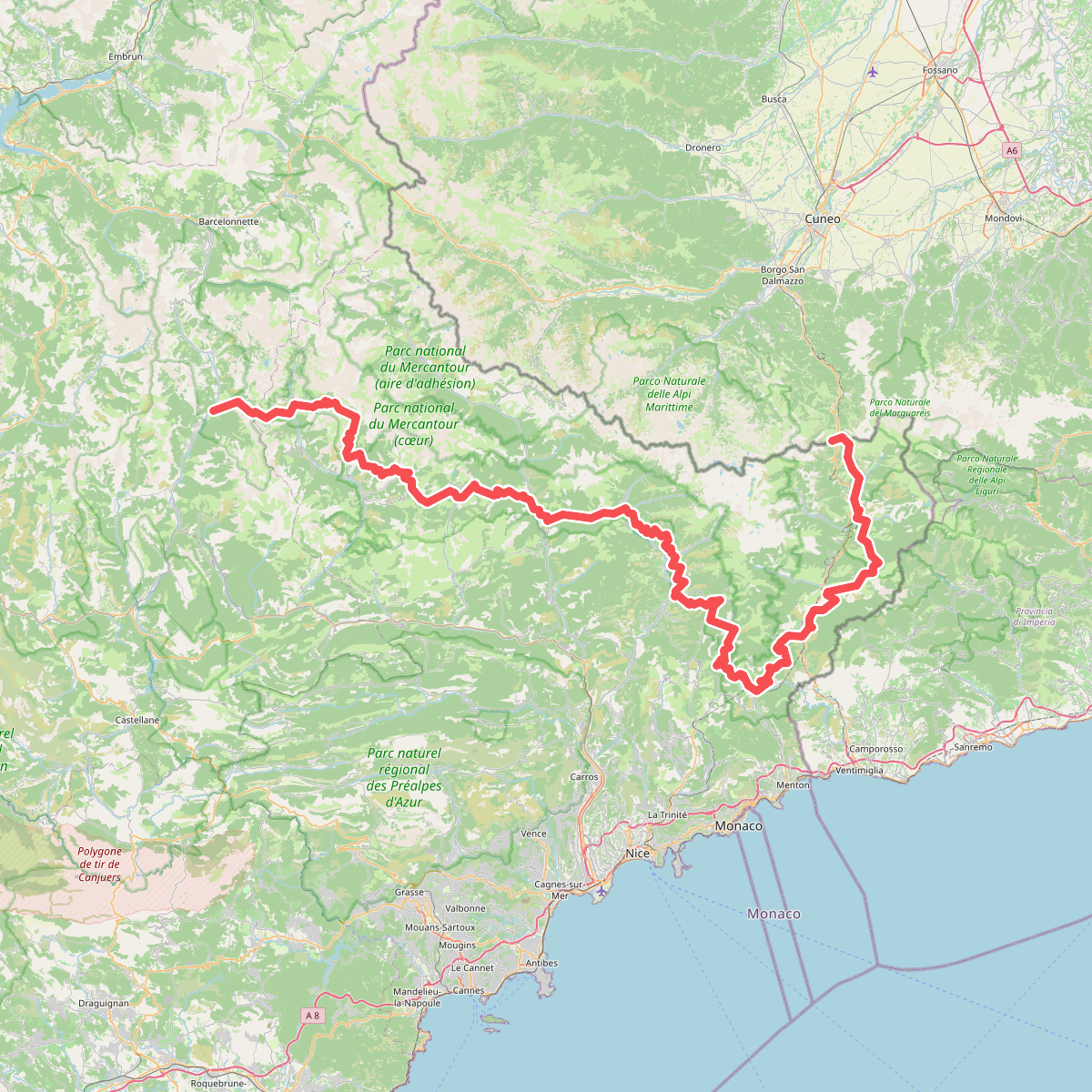
#1. Le Sentier panoramique du Mercantour
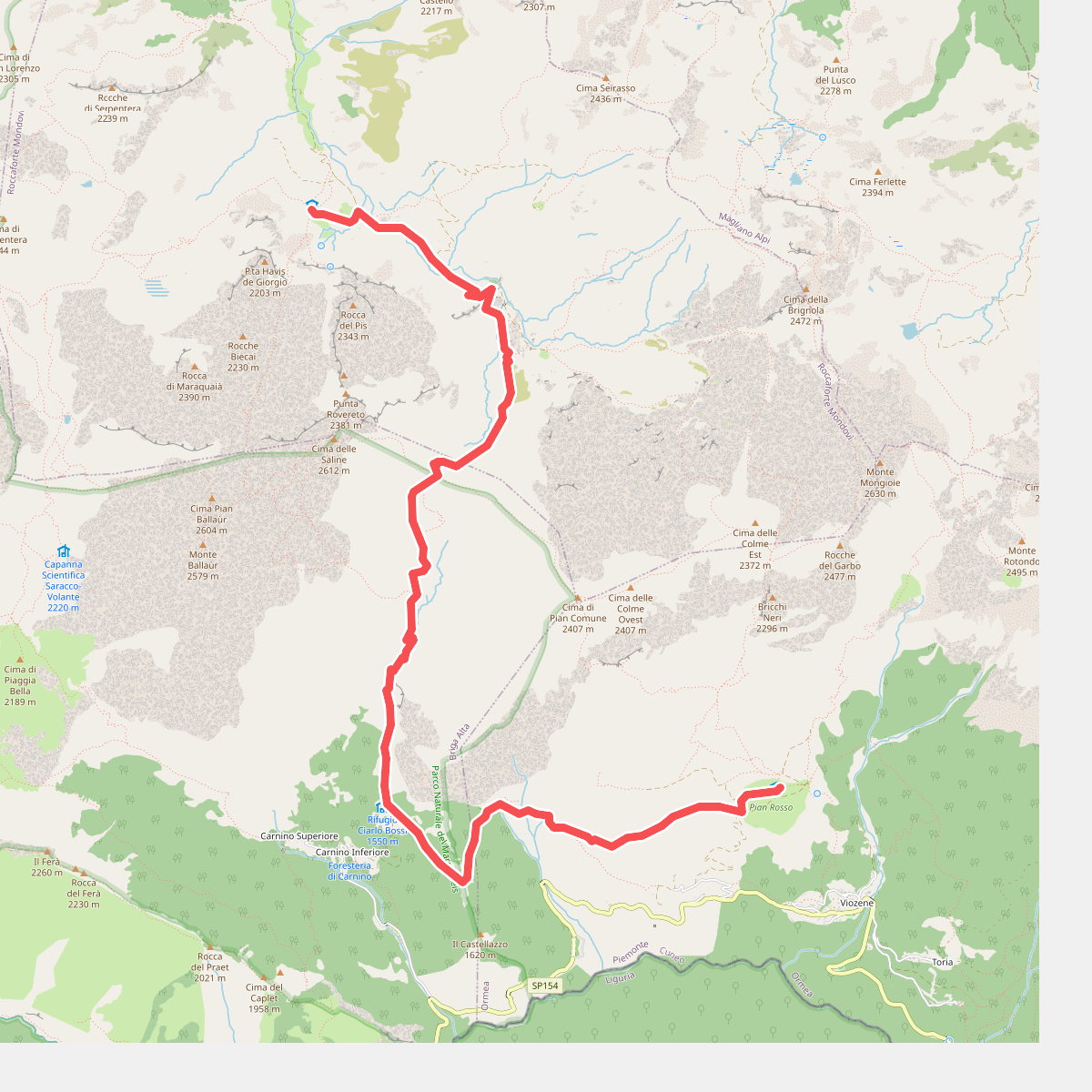
#2. Sentiero Italia - Piemonte E00 · SI
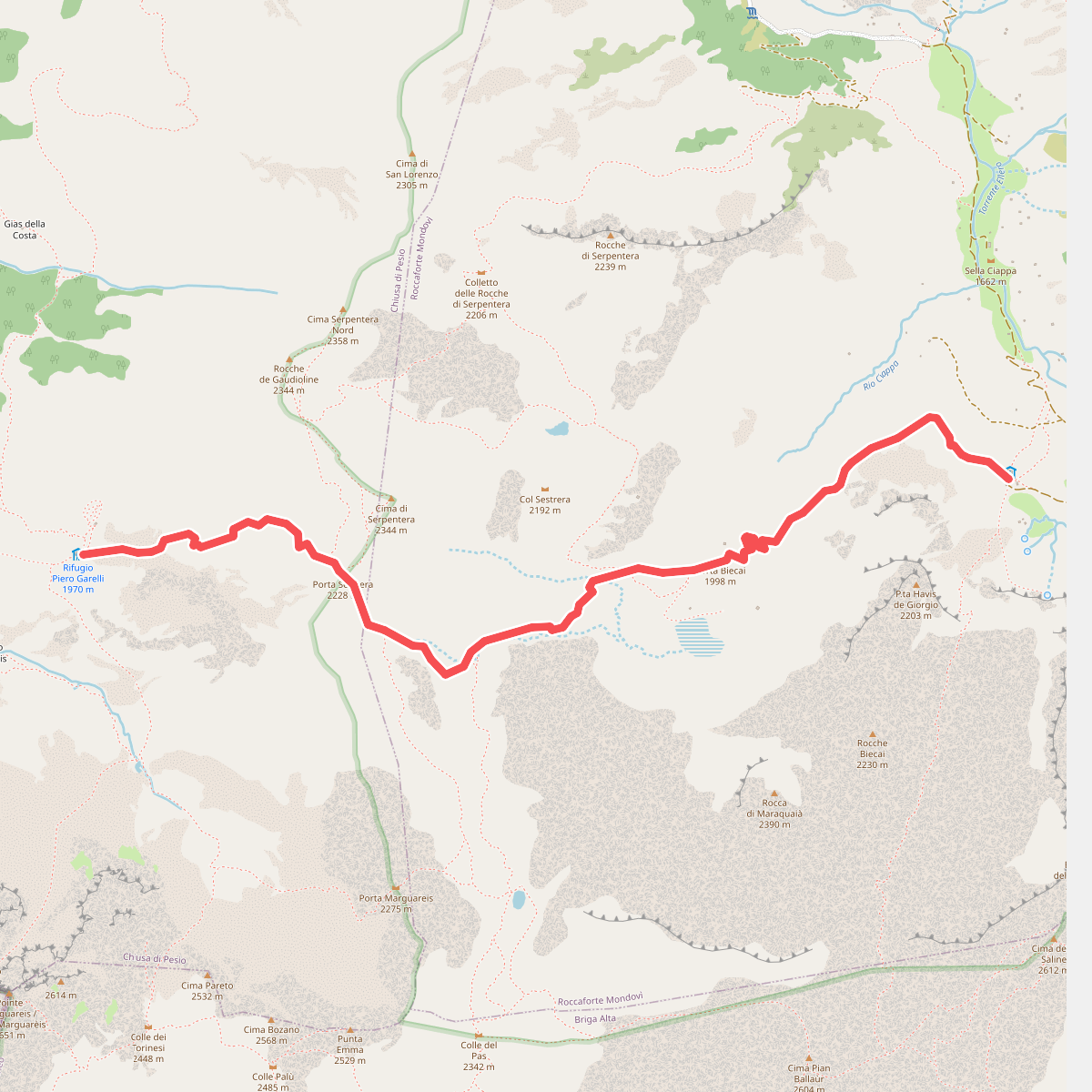
#3. Sentiero Italia - Piemonte E00 · SI
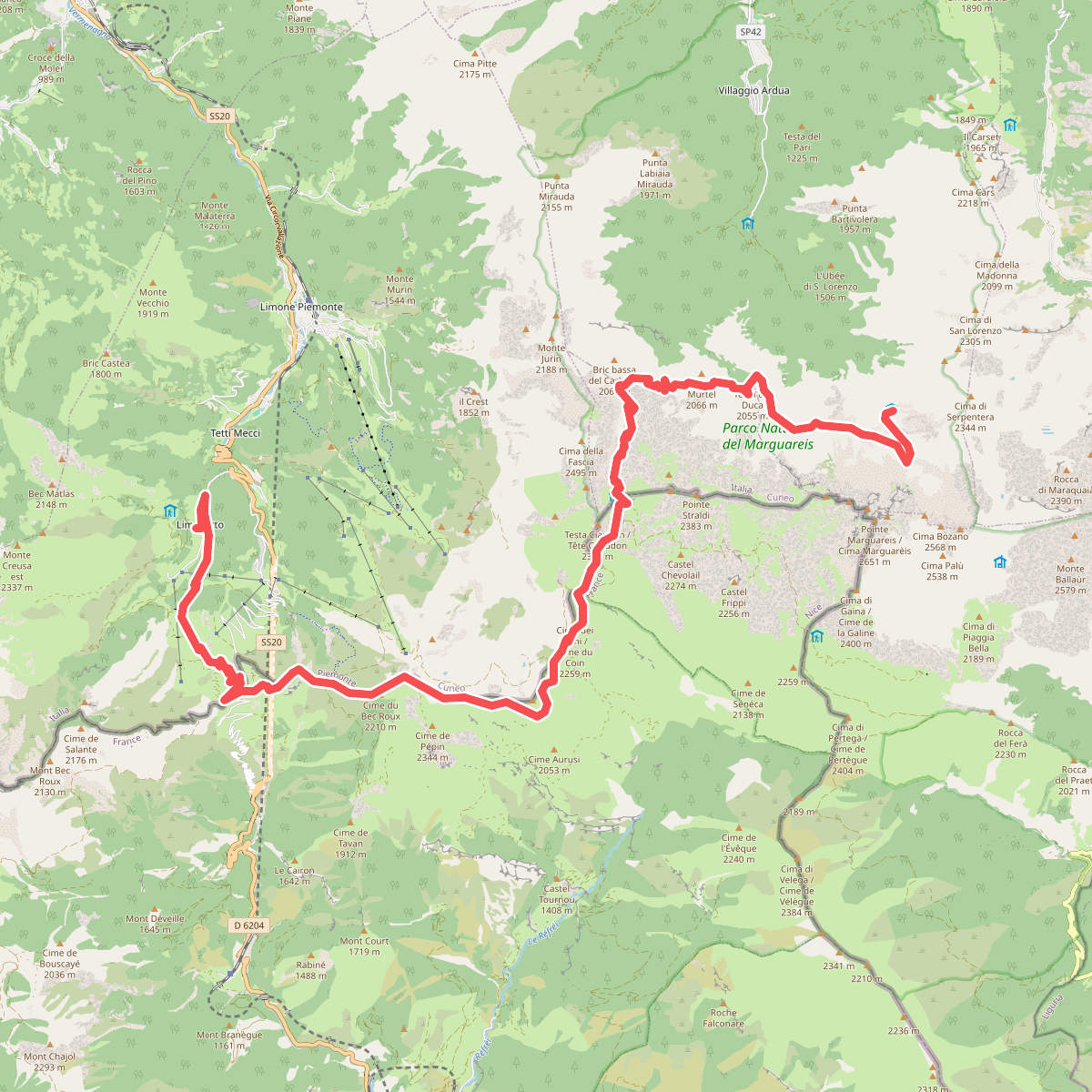
#4. Sentiero Italia - Piemonte E00 · SI