
The best hiking routes in Parc Natural del Desert de les Palmes
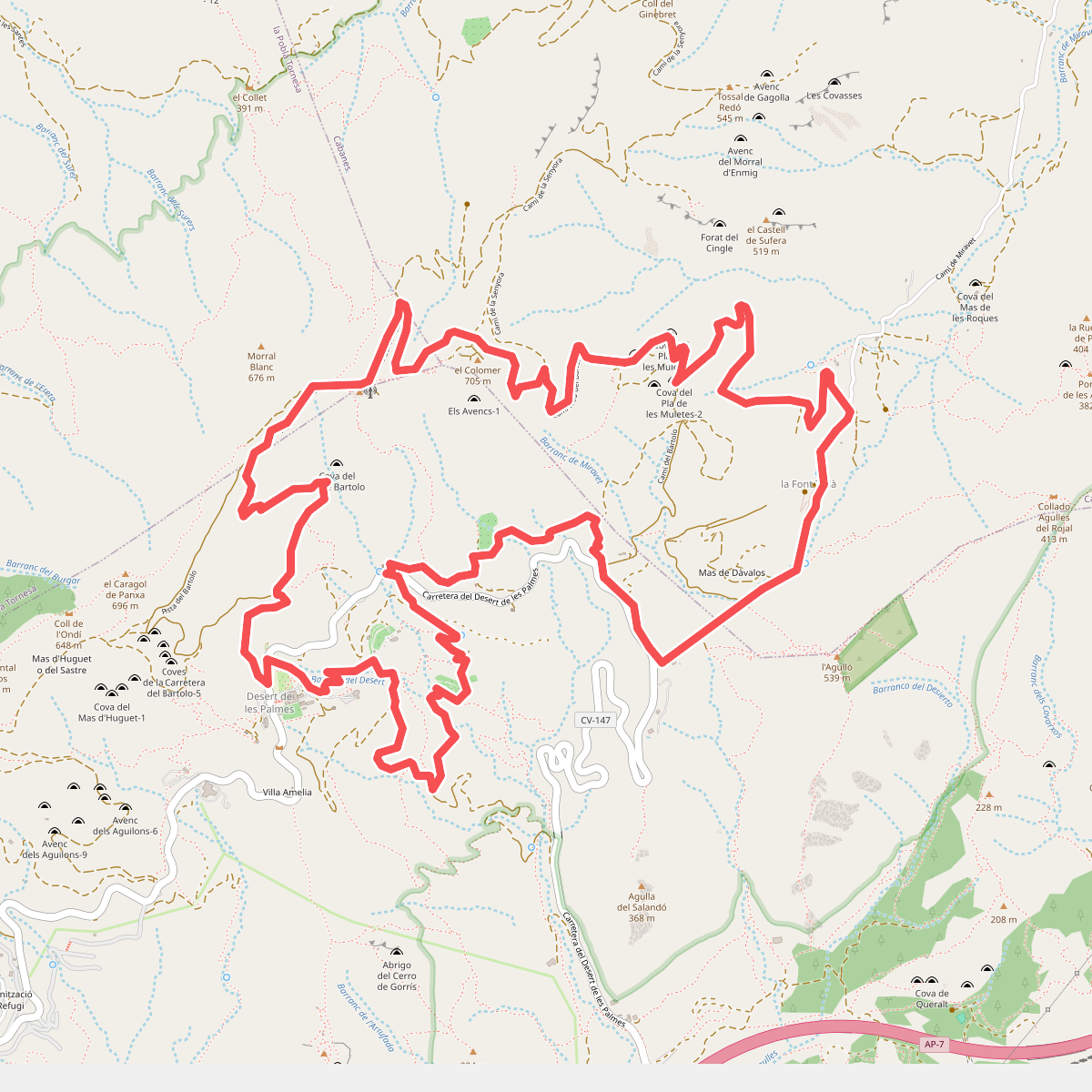
Discover the best walks in Parc Natural del Desert de les Palmes. 1 routes on the map, with descriptions, photos and GPX.
About Parc Natural del Desert de les Palmes
Parc Natural del Desert de les Palmes rises steeply behind the coastal strip of Castellón, offering a landscape of red sandstone hills, dense Mediterranean scrub, and ruins. Despite the name, this is not a sandy desert, but a dry, mountainous area historically used for spiritual retreat. The terrain is dominated by low shrubs, rosemary, and dwarf palms, which are the only native palm trees in Europe. Walking here means navigating a mix of rough, stony tracks and dusty paths that climb toward the high ridges.
Read more
About Parc Natural del Desert de les Palmes
Parc Natural del Desert de les Palmes rises steeply behind the coastal strip of Castellón, offering a landscape of red sandstone hills, dense Mediterranean scrub, and ruins. Despite the name, this is not a sandy desert, but a dry, mountainous area historically used for spiritual retreat. The terrain is dominated by low shrubs, rosemary, and dwarf palms, which are the only native palm trees in Europe. Walking here means navigating a mix of rough, stony tracks and dusty paths that climb toward the high ridges.
Read moreParc Natural del Desert de les Palmes rises steeply behind the coastal strip of Castellón, offering a landscape of red sandstone hills, dense Mediterranean scrub, and ruins. Despite the name, this is not a sandy desert, but a dry, mountainous area historically used for spiritual retreat. The terrain is dominated by low shrubs, rosemary, and dwarf palms, which are the only native palm trees in Europe. Walking here means navigating a mix of rough, stony tracks and dusty paths that climb toward the high ridges.
Underfoot, the ground is predominantly hard-packed earth mixed with loose red scree and limestone rocks, requiring stable footwear. As you ascend, the vegetation thins out, revealing views of the nearby coastline and the Columbretes Islands on clear days. The lower slopes feature shaded pine groves, while the higher ridges are exposed to the elements, with bare rock formations shaped by erosion.
This reserve is not a place for lush green forests or running water, as the stream beds are dry for most of the year. Instead, walkers will find a rugged, arid environment where the ruins of the old Carmelite monastery stand as a central landmark. The main tracks are generally wide and easy to follow, though the narrower footpaths leading to the summits of Bartolo or Les Santes are steeper and more uneven.