
The best hiking routes in Paisaje Protegido de Las Lagunetas
Discover the best walks in Paisaje Protegido de Las Lagunetas. 15 routes on the map, with descriptions, photos and GPX.
About Paisaje Protegido de Las Lagunetas
Paisaje Protegido de Las Lagunetas occupies a high-altitude transition zone in the northeast of Tenerife, bridging the dry coastal scrub and the high volcanic peaks. This protected area is characterized by dense Canary Island pine forests and humid laurel woodlands, which trap the moisture from the trade winds. Walkers will notice a distinct change in vegetation and humidity as they move between the wetter, moss-draped northern slopes and the drier, more open pine stands on the southern ridges.
Read more
About Paisaje Protegido de Las Lagunetas
Paisaje Protegido de Las Lagunetas occupies a high-altitude transition zone in the northeast of Tenerife, bridging the dry coastal scrub and the high volcanic peaks. This protected area is characterized by dense Canary Island pine forests and humid laurel woodlands, which trap the moisture from the trade winds. Walkers will notice a distinct change in vegetation and humidity as they move between the wetter, moss-draped northern slopes and the drier, more open pine stands on the southern ridges.
Read morePaisaje Protegido de Las Lagunetas occupies a high-altitude transition zone in the northeast of Tenerife, bridging the dry coastal scrub and the high volcanic peaks. This protected area is characterized by dense Canary Island pine forests and humid laurel woodlands, which trap the moisture from the trade winds. Walkers will notice a distinct change in vegetation and humidity as they move between the wetter, moss-draped northern slopes and the drier, more open pine stands on the southern ridges.
Underfoot, the trails consist of soft pine needle carpets, loose volcanic gravel, and packed earth tracks. The terrain is dominated by steep, deeply incised ravines and rolling forested ridges rather than flat plains or jagged alpine summits. Navigating this landscape requires steady footing, as the volcanic soil can be slippery on the steeper descents, and the paths frequently ascend and descend through the barrancos.
This reserve is less crowded than the neighboring national park of Teide, offering a quieter, more forested experience. In winter, particularly around January, the dampest barrancos fill with lush green ferns and dripping mosses, while the higher pine forests remain relatively open and dry. It is a landscape defined by verticality, shade, and the scent of damp earth and pine resin.
Hiking routes in Paisaje Protegido de Las Lagunetas (15)
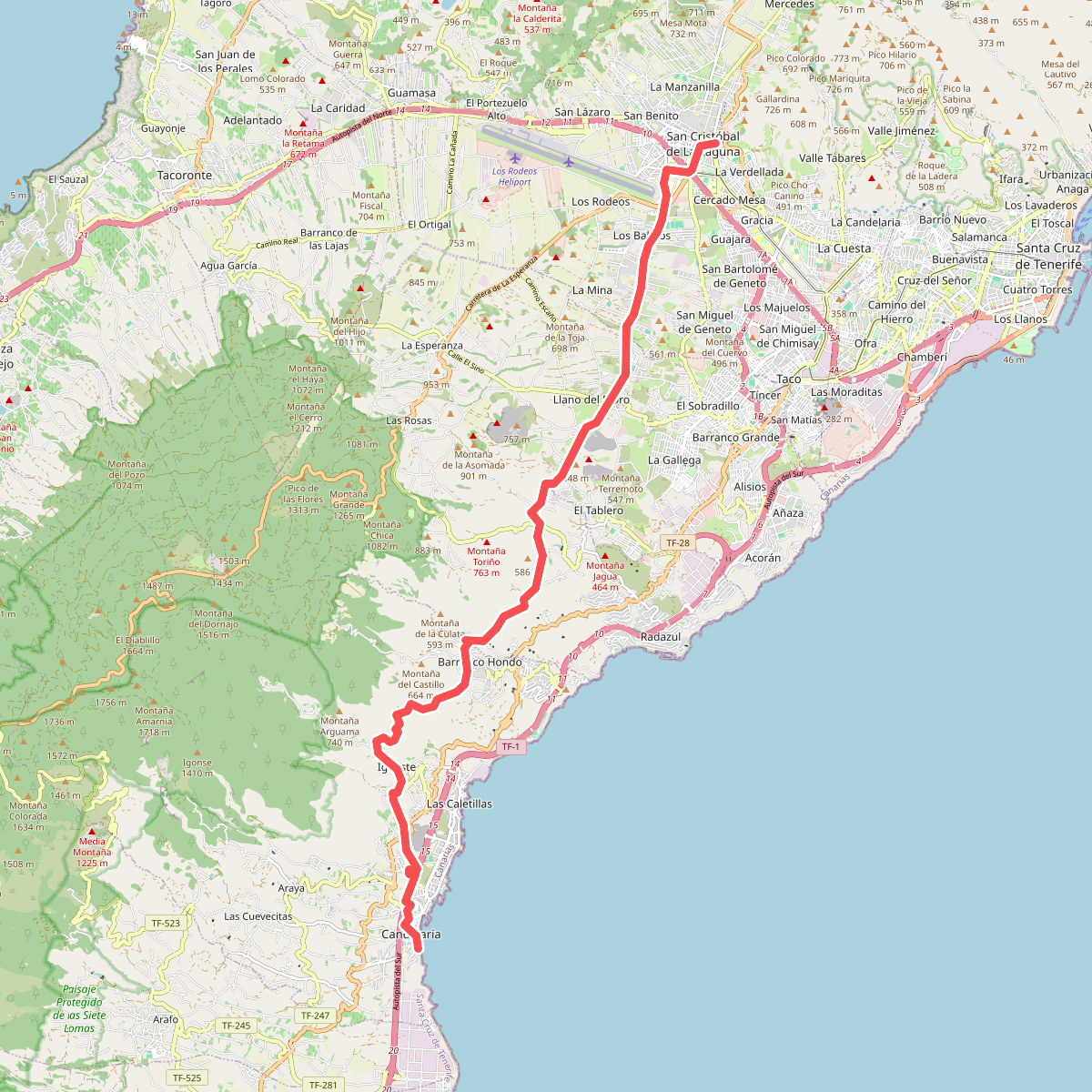
#1. Camino de Candelaria de La Laguna
San Cristóbal de La Laguna,Santa Cruz de Tenerife,El Rosario,Candelaria
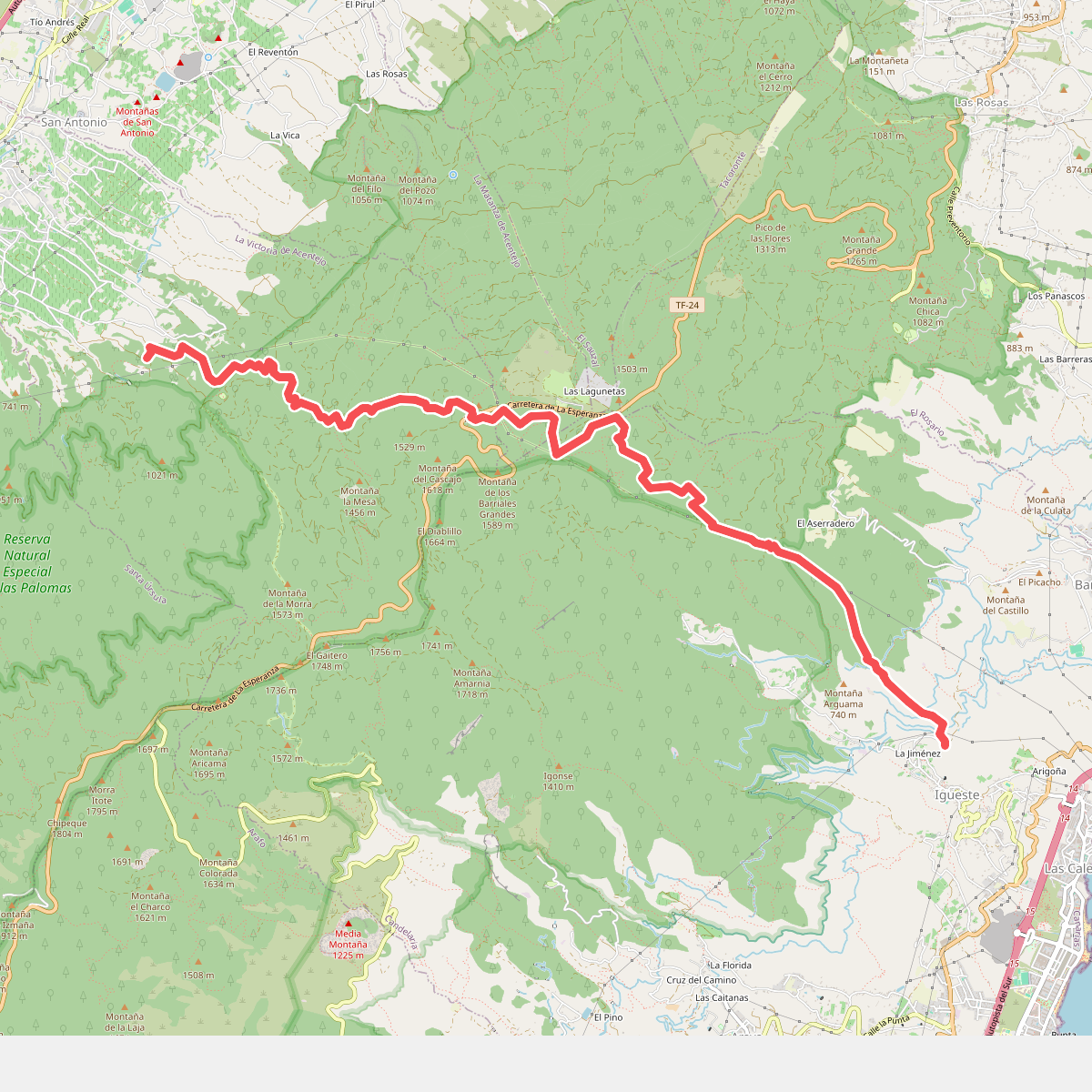
#2. Camino de Candelaria de la Victoria
La Victoria de Acentejo,La Matanza de Acentejo,Candelaria
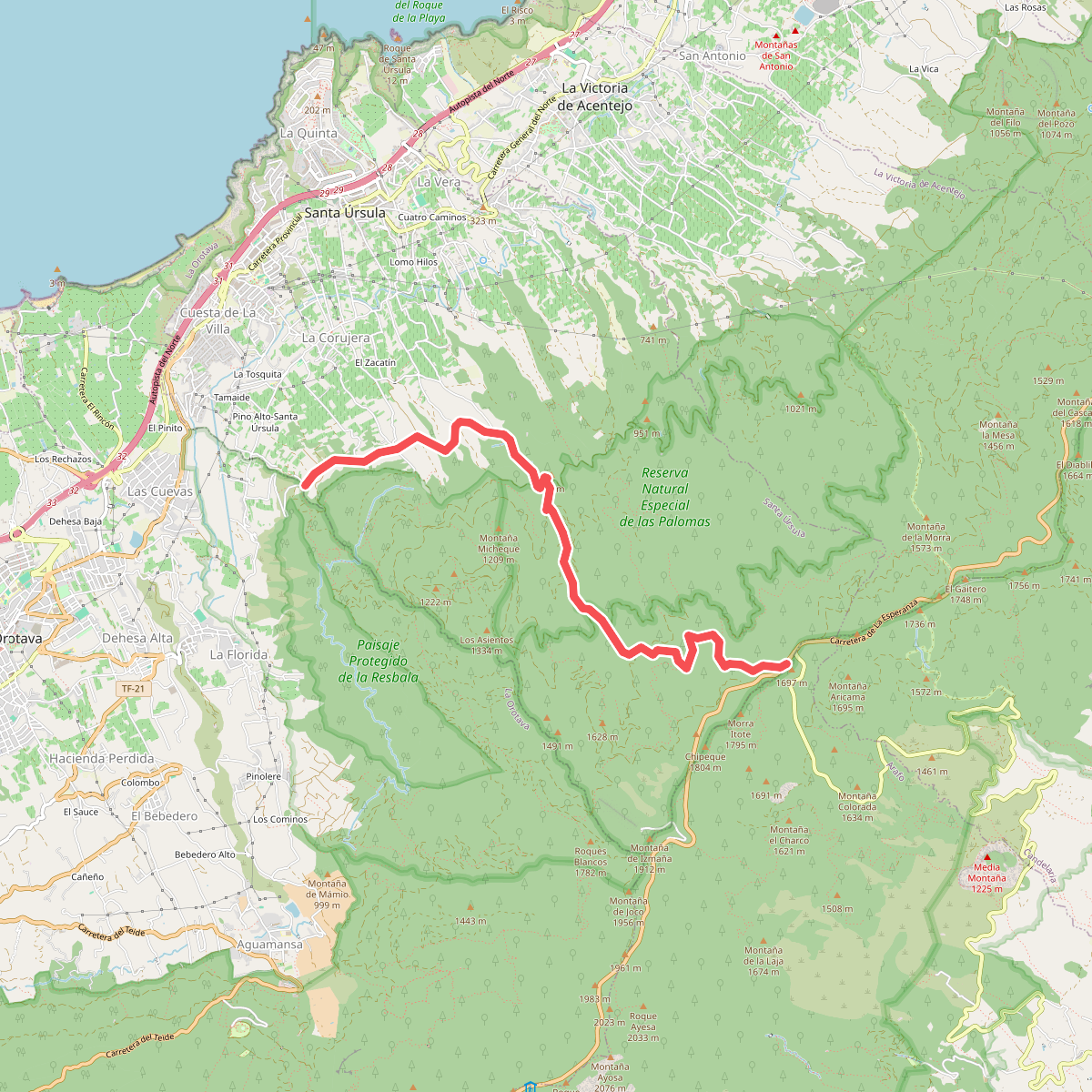
#3. Camino de Candelaria de Santa Ursula
Santa Úrsula
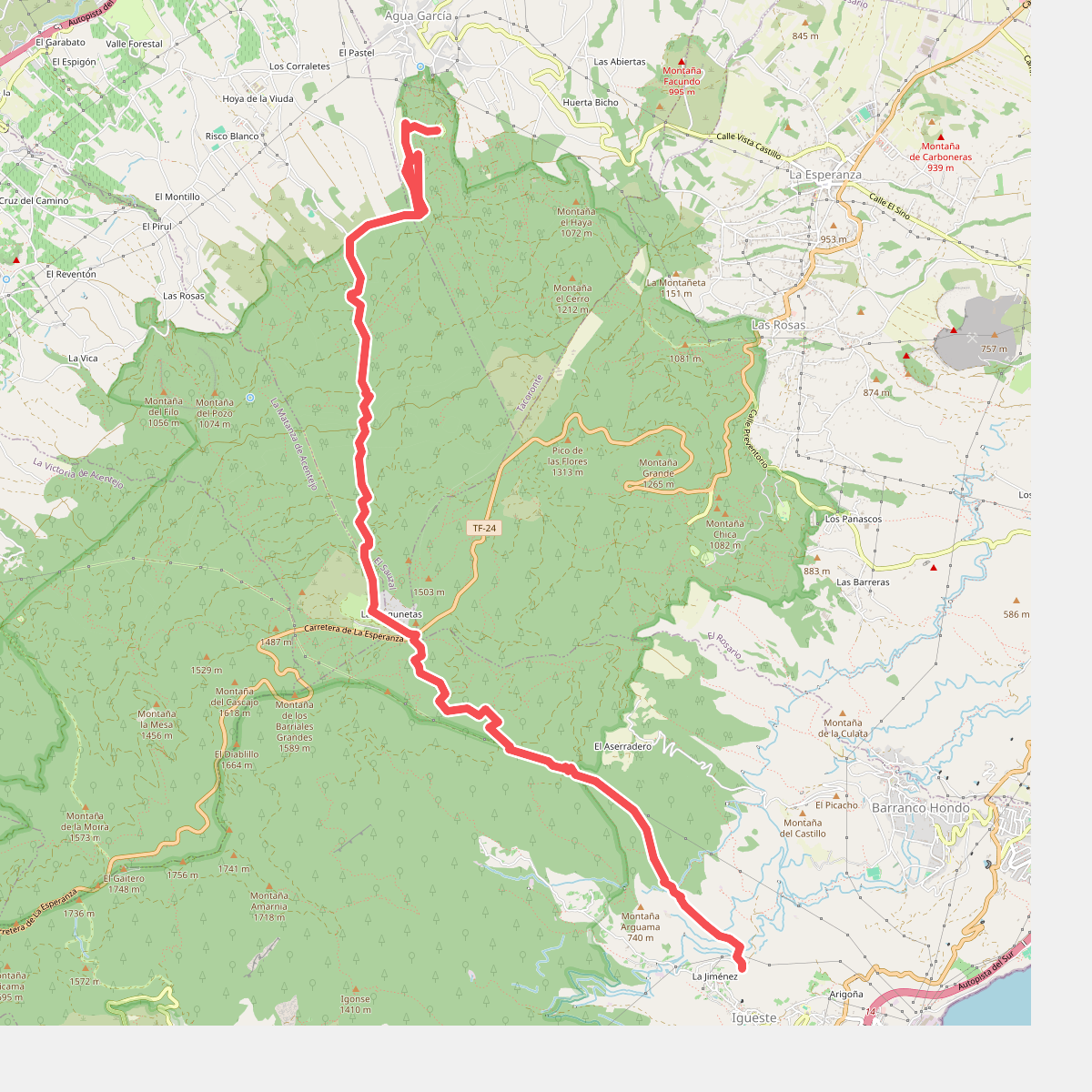
#4. Camino de Candelaria de Tacoronte-El Sauzal
Tacoronte,El Sauzal,La Matanza de Acentejo,Candelaria
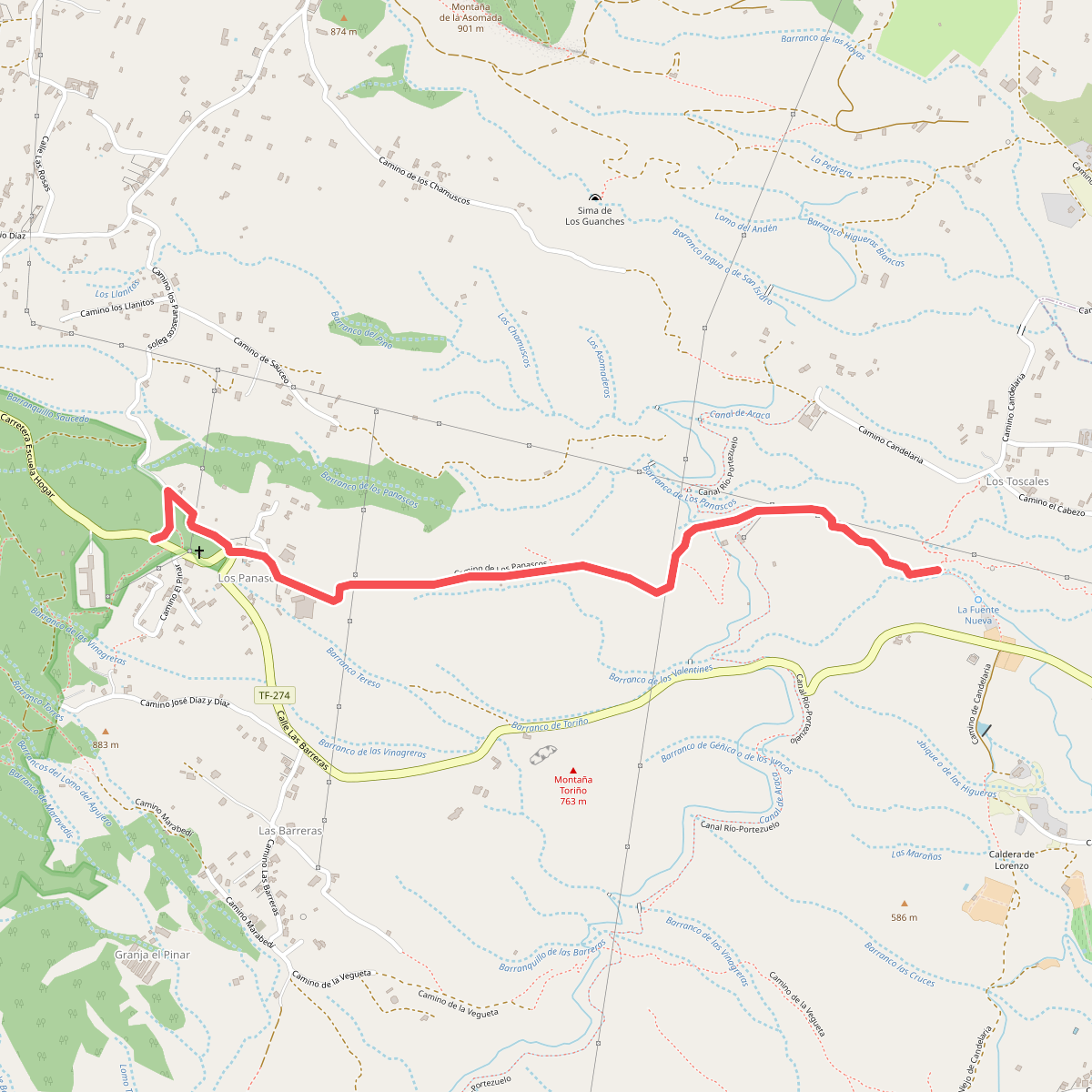
#5. Camino de Los Panascos
El Rosario
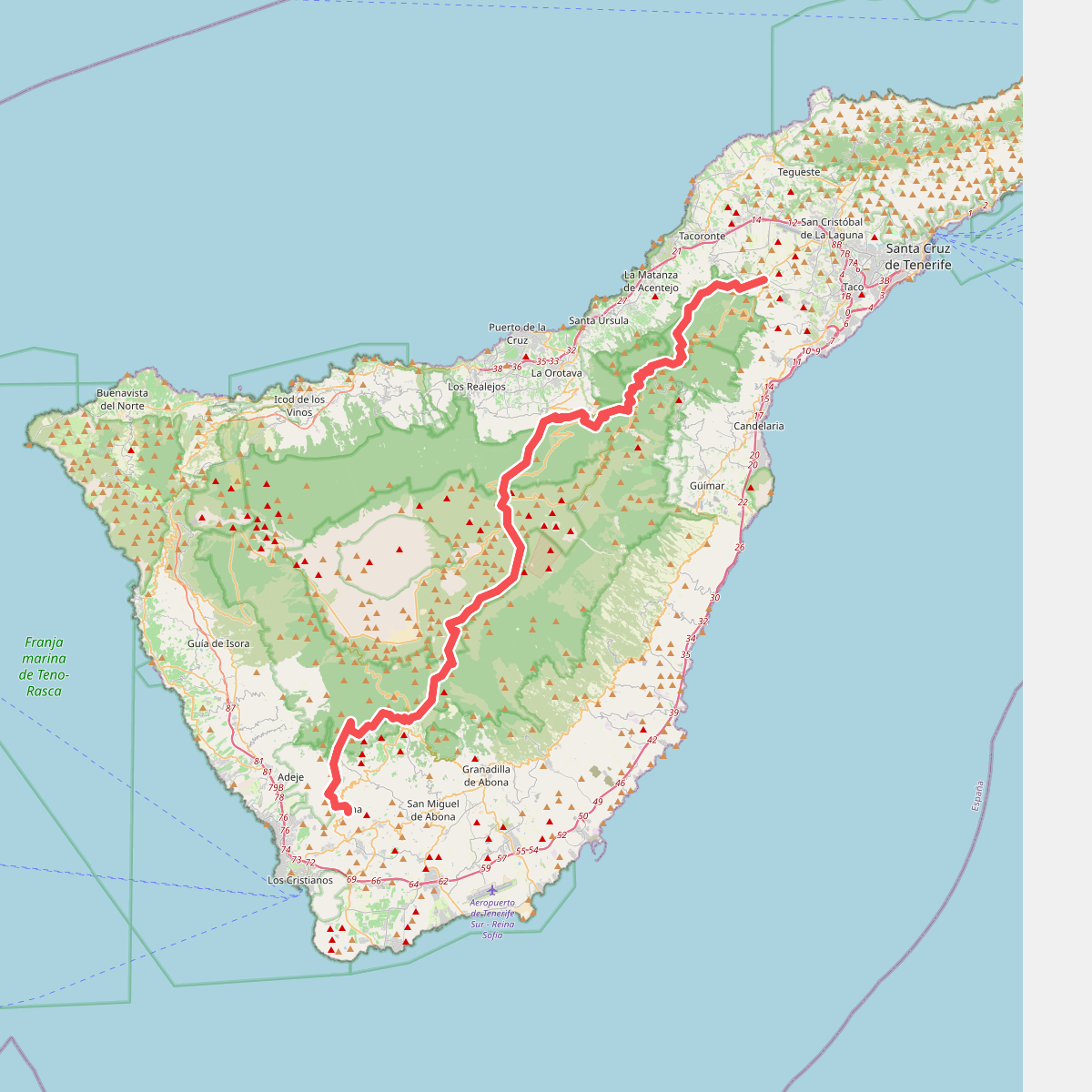
#6. Camino Natural Anaga-Chasna
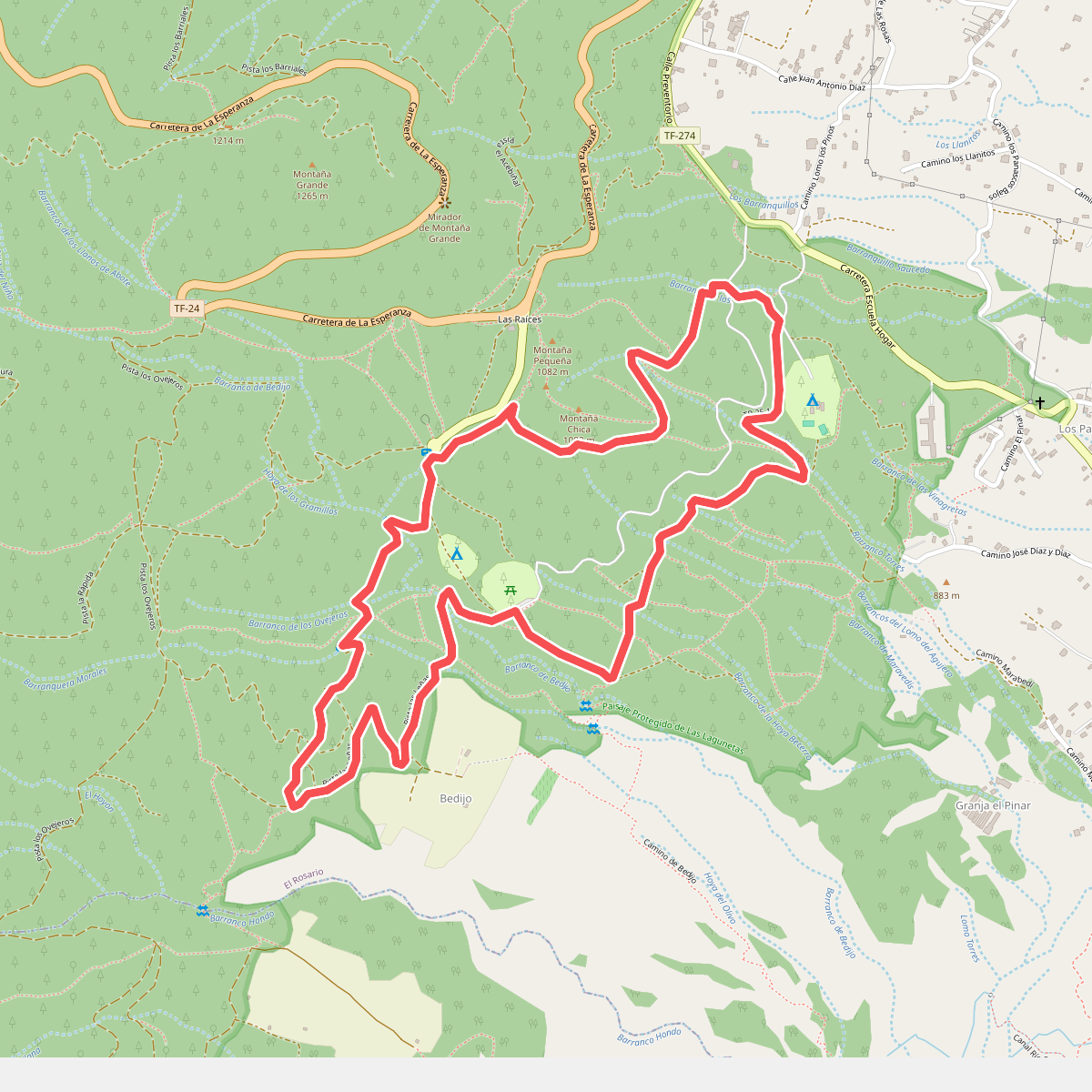
#7. Circular Las Raíces
El Rosario
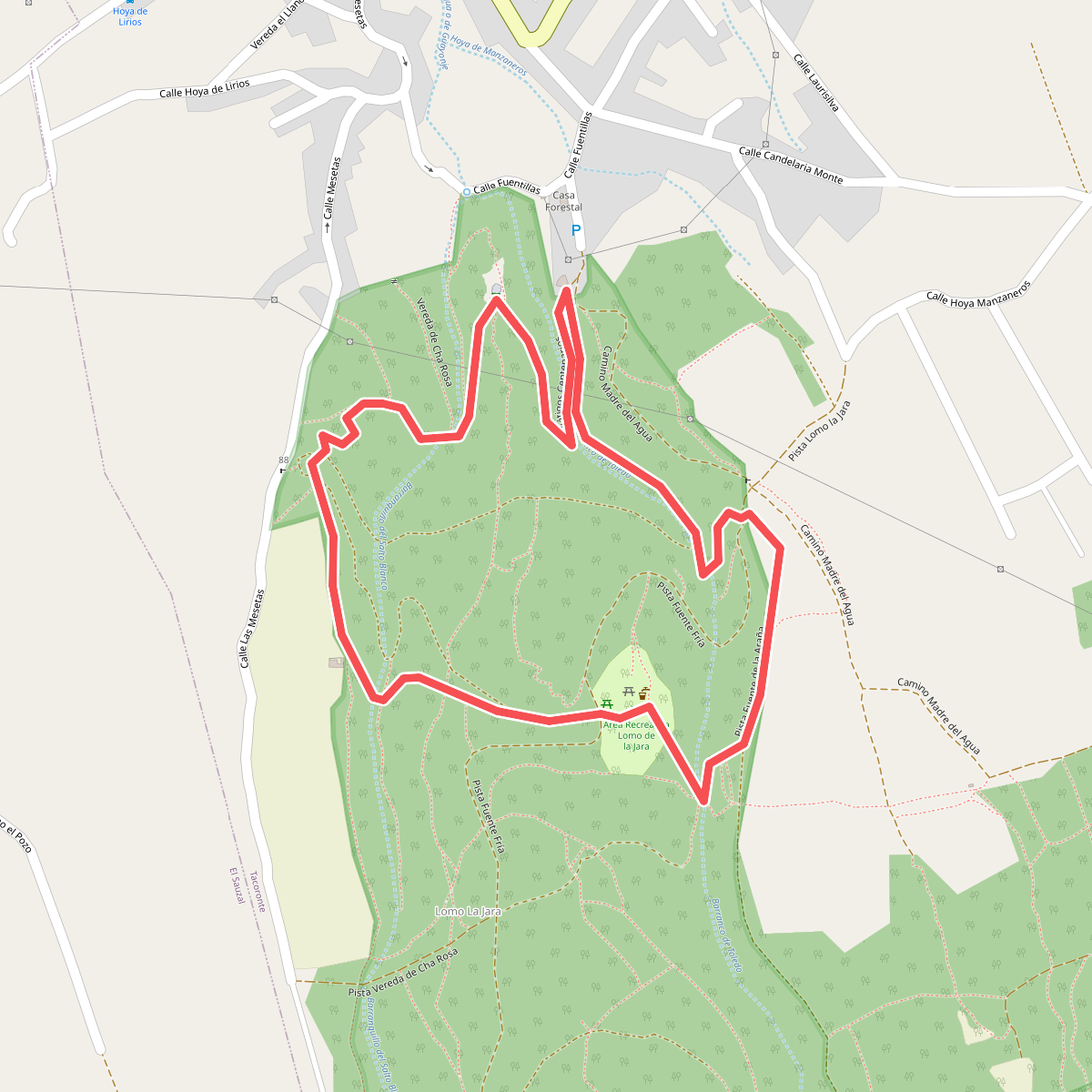
#8. Circular Lomo de la Jara
Tacoronte
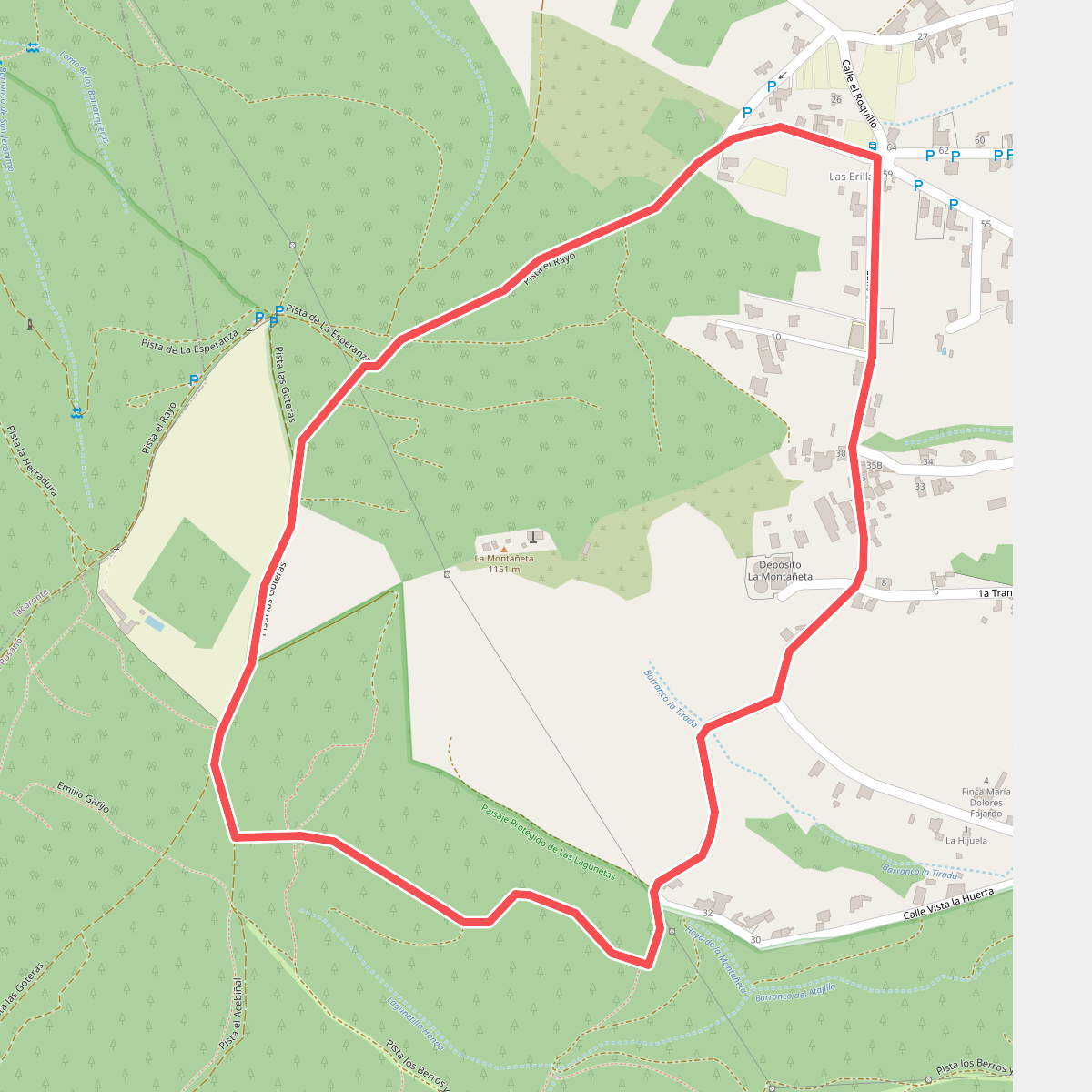
#9. Las Erillas
El Rosario
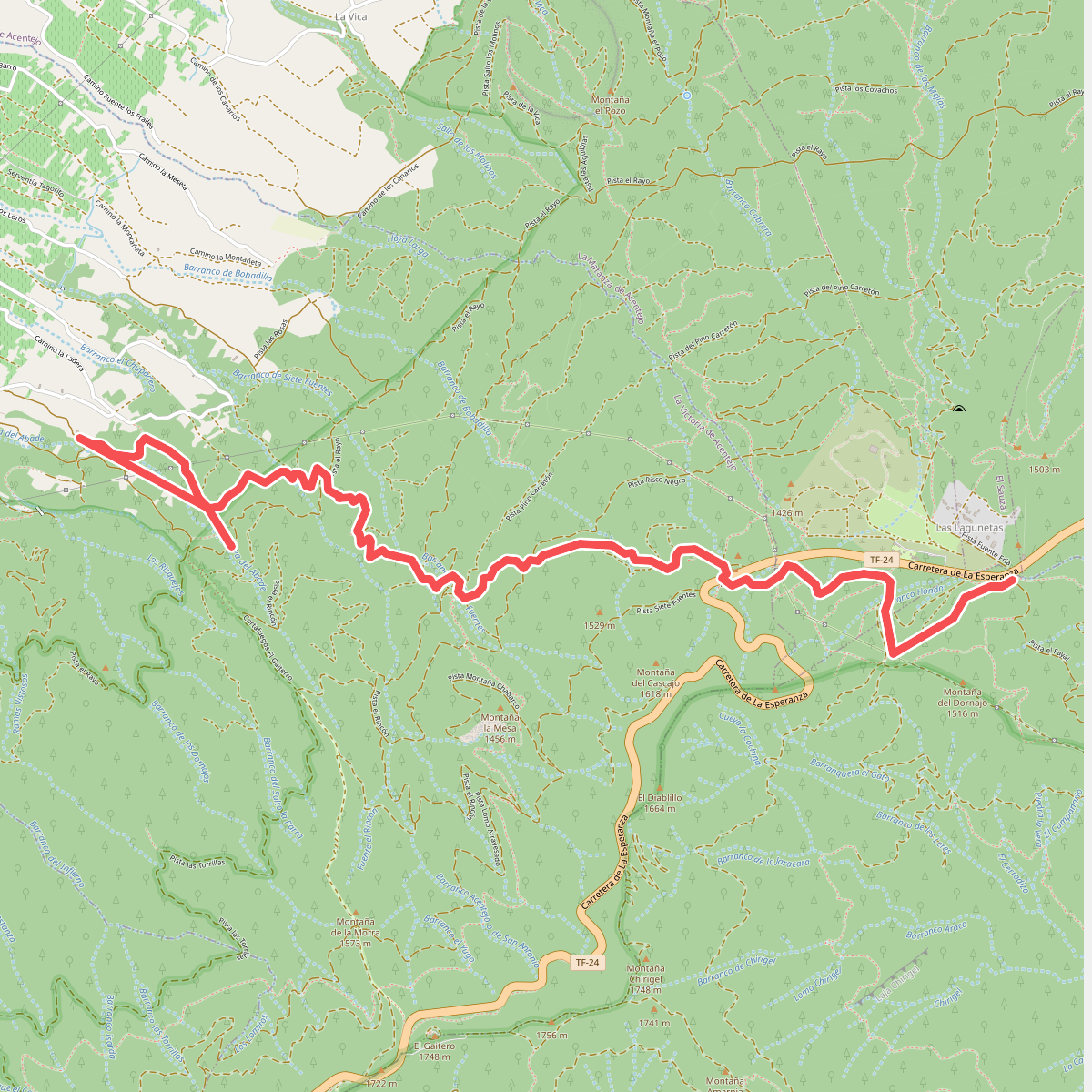
#10. Las Lagunetas-Hoya del Abade
Candelaria,La Matanza de Acentejo,La Victoria de Acentejo
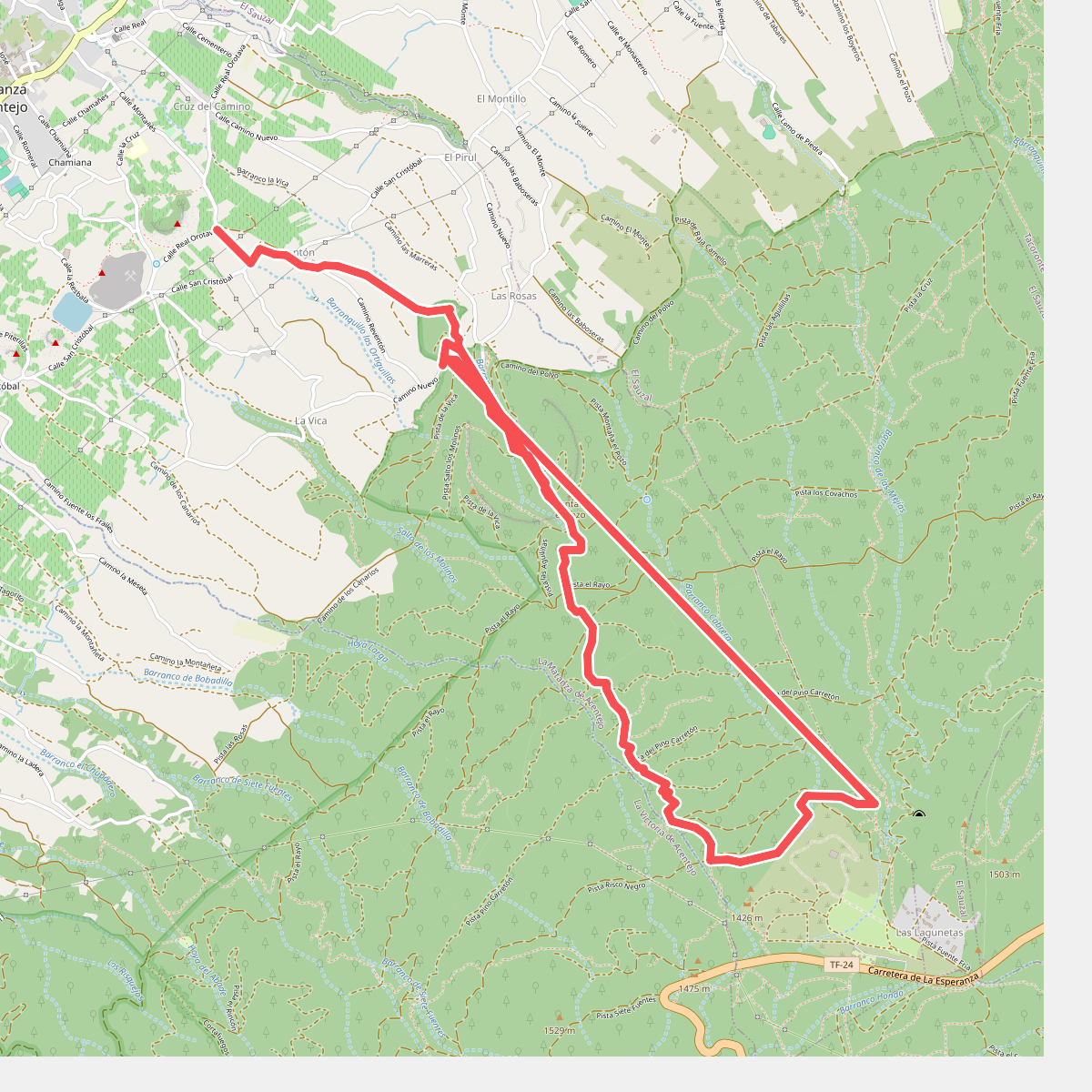
#11. Las Lagunetas-Los Nateros
La Matanza de Acentejo
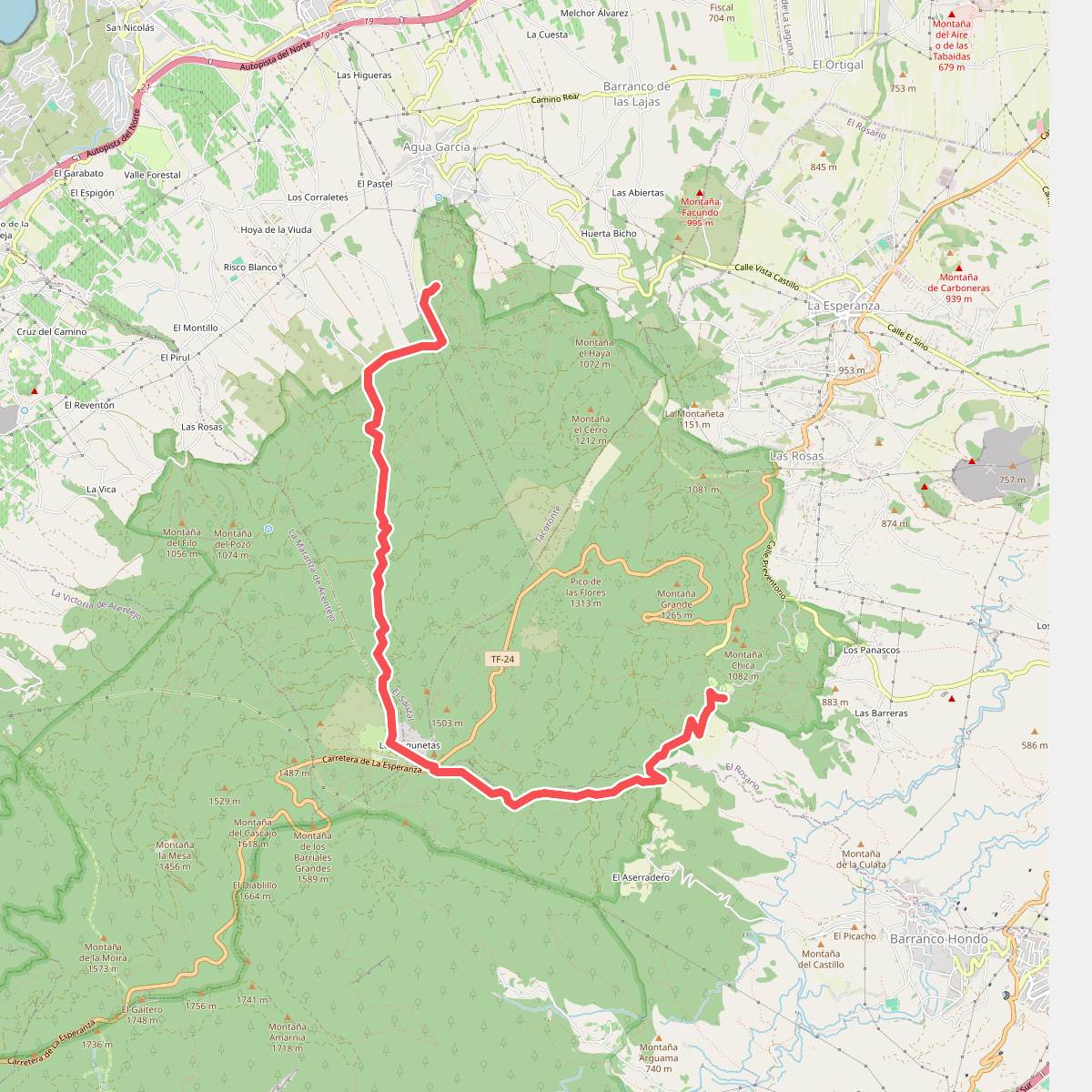
#12. Las Raices-Lomo de la Jara
Candelaria,La Matanza de Acentejo,El Sauzal,Tacoronte,El Rosario