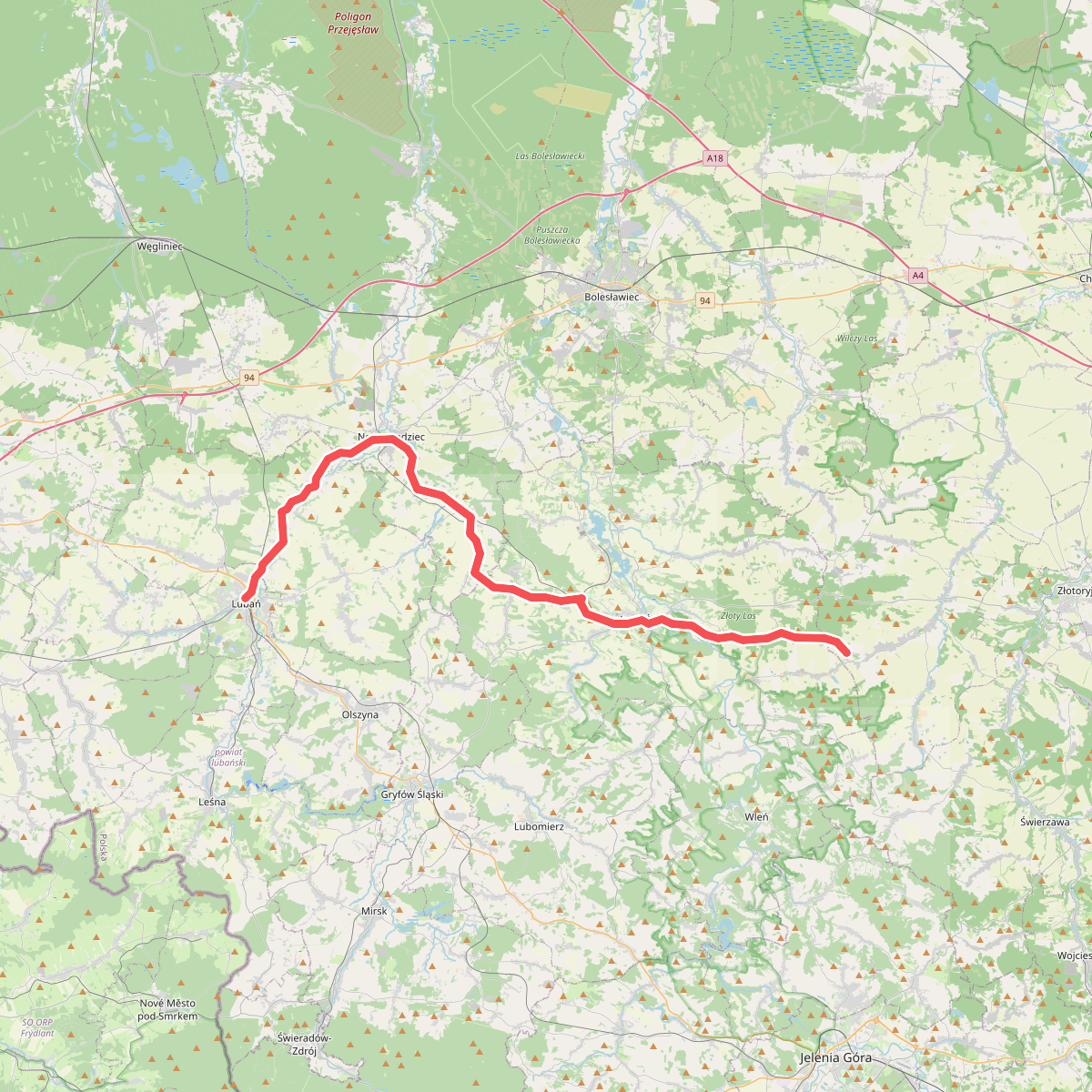

The best hiking routes in Obszar Chronionego Krajobrazu Grodziec
Discover the best walks in Obszar Chronionego Krajobrazu Grodziec. 1 routes on the map, with descriptions, photos and GPX.
About Obszar Chronionego Krajobrazu Grodziec
Obszar Chronionego Krajobrazu Grodziec offers a landscape shaped by historical limestone quarrying and forestry, resulting in a terrain of low, wooded hills and reclaimed industrial hollows. Unlike flatter agricultural plains nearby, this protected area is defined by the prominent Grodziec hill, where dense deciduous and mixed woodland covers the slopes. Walking here means navigating a mix of wide, packed-dirt forestry tracks and narrower, stony paths that can be uneven underfoot due to exposed limestone fragments and tree roots.
Read more
About Obszar Chronionego Krajobrazu Grodziec
Obszar Chronionego Krajobrazu Grodziec offers a landscape shaped by historical limestone quarrying and forestry, resulting in a terrain of low, wooded hills and reclaimed industrial hollows. Unlike flatter agricultural plains nearby, this protected area is defined by the prominent Grodziec hill, where dense deciduous and mixed woodland covers the slopes. Walking here means navigating a mix of wide, packed-dirt forestry tracks and narrower, stony paths that can be uneven underfoot due to exposed limestone fragments and tree roots.
Read moreObszar Chronionego Krajobrazu Grodziec offers a landscape shaped by historical limestone quarrying and forestry, resulting in a terrain of low, wooded hills and reclaimed industrial hollows. Unlike flatter agricultural plains nearby, this protected area is defined by the prominent Grodziec hill, where dense deciduous and mixed woodland covers the slopes. Walking here means navigating a mix of wide, packed-dirt forestry tracks and narrower, stony paths that can be uneven underfoot due to exposed limestone fragments and tree roots.
The forest floor changes noticeably depending on your position on the slopes. The higher ridges feature drier, beech-dominated woodland with a clear understory, while the lower depressions and former excavation sites have developed damp, overgrown hollows where birch and willow thrive. You will not find dramatic gorges or high mountain peaks here, but rather a gently rolling, post-industrial woodland that is gradually returning to a wilder state.
In spring, particularly around May, the forest floor on the limestone soils becomes covered in early-blooming wildflowers before the canopy closes. The area is popular with local walkers around the historic ruins at the summit, but the deeper woodland paths away from the main tracks are often much quieter.