The best hiking routes in Mittlerer Schurwald
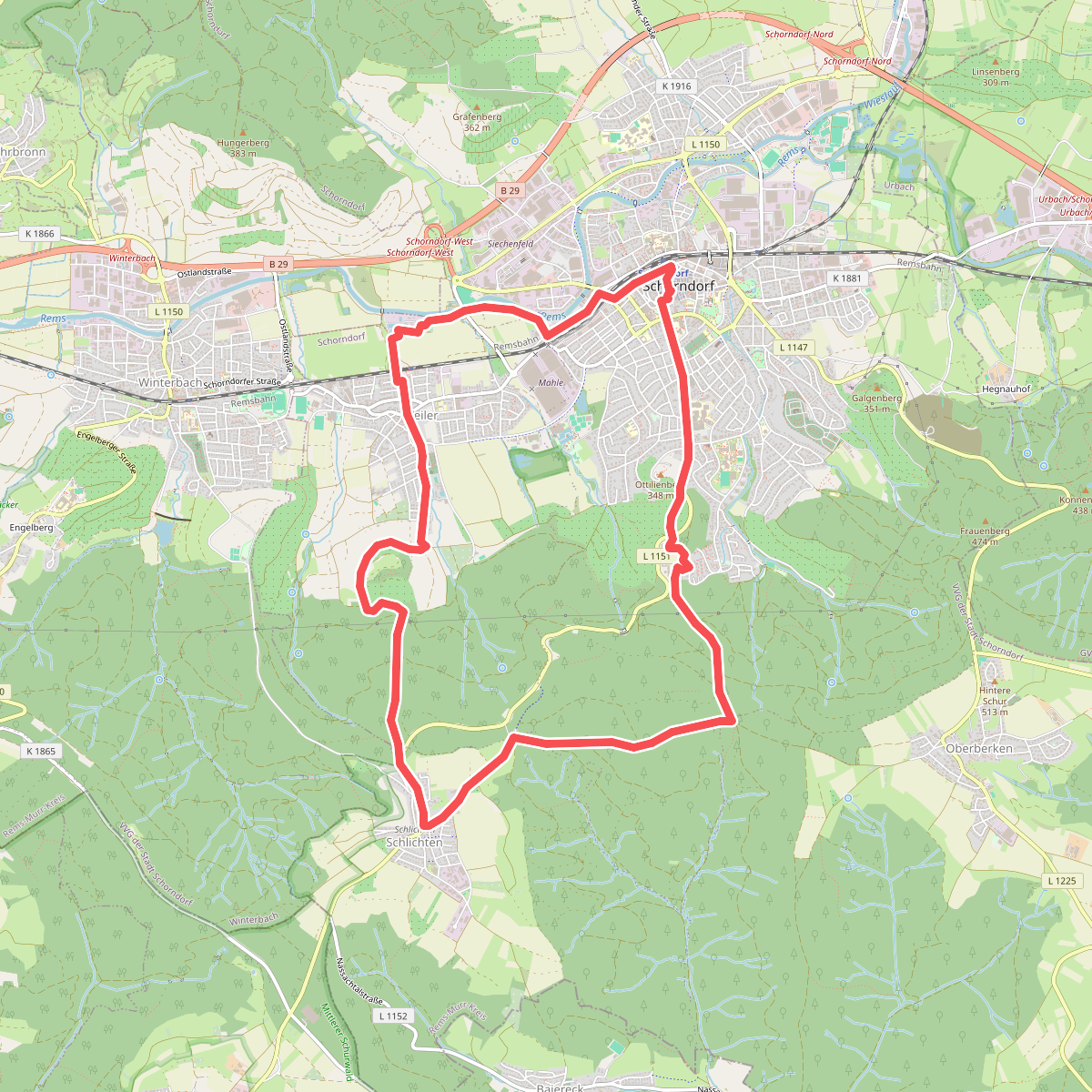
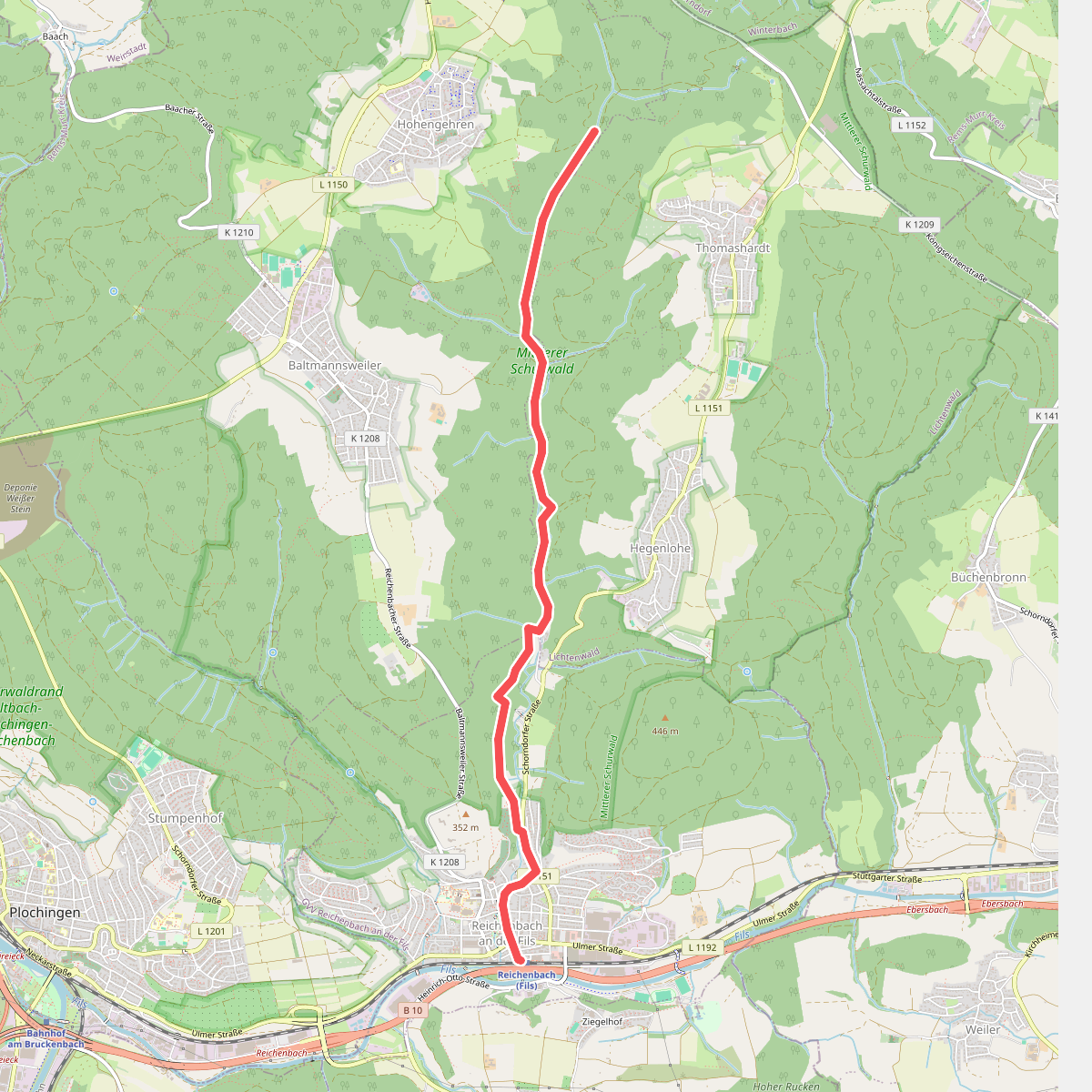
Discover the best walks in Mittlerer Schurwald. 2 routes on the map, with descriptions, photos and GPX.
About Mittlerer Schurwald
The Mittlerer Schurwald is a densely forested, gently rolling sandstone ridge that rises between the Rems and Fils valleys. Unlike the steep limestone cliffs of the nearby Swabian Alb, this landscape is defined by broad, flat-topped hills cut by deep, damp blade ravines. Walkers will find a dense network of wide, gravelled forestry tracks alongside narrow, clayey paths that can become slick after rain. The forest canopy is dominated by managed stands of beech, oak, and spruce, which cast deep shade over the forest floor.
Read more
About Mittlerer Schurwald
The Mittlerer Schurwald is a densely forested, gently rolling sandstone ridge that rises between the Rems and Fils valleys. Unlike the steep limestone cliffs of the nearby Swabian Alb, this landscape is defined by broad, flat-topped hills cut by deep, damp blade ravines. Walkers will find a dense network of wide, gravelled forestry tracks alongside narrow, clayey paths that can become slick after rain. The forest canopy is dominated by managed stands of beech, oak, and spruce, which cast deep shade over the forest floor.
Read moreThe Mittlerer Schurwald is a densely forested, gently rolling sandstone ridge that rises between the Rems and Fils valleys. Unlike the steep limestone cliffs of the nearby Swabian Alb, this landscape is defined by broad, flat-topped hills cut by deep, damp blade ravines. Walkers will find a dense network of wide, gravelled forestry tracks alongside narrow, clayey paths that can become slick after rain. The forest canopy is dominated by managed stands of beech, oak, and spruce, which cast deep shade over the forest floor.
As you walk, you will notice the transition from the dry, sandy soils of the upper ridges to the boggy, clay-heavy ground in the valley bottoms. Small streams have carved narrow gorges into the soft sandstone, exposing layers of rock and creating damp microclimates where ferns and mosses thrive. It is a working forest, so you will frequently encounter timber stacks and active forestry tracks rather than untouched wilderness.
The area is easily accessible from the Stuttgart metropolitan fringe, making the trailheads near the ridge-top villages popular on weekends. While the main gravel paths are well-frequented, the steeper, unpaved trails descending into the side valleys offer a quieter, more enclosed woodland experience.