The best hiking routes in Góry Bardzkie
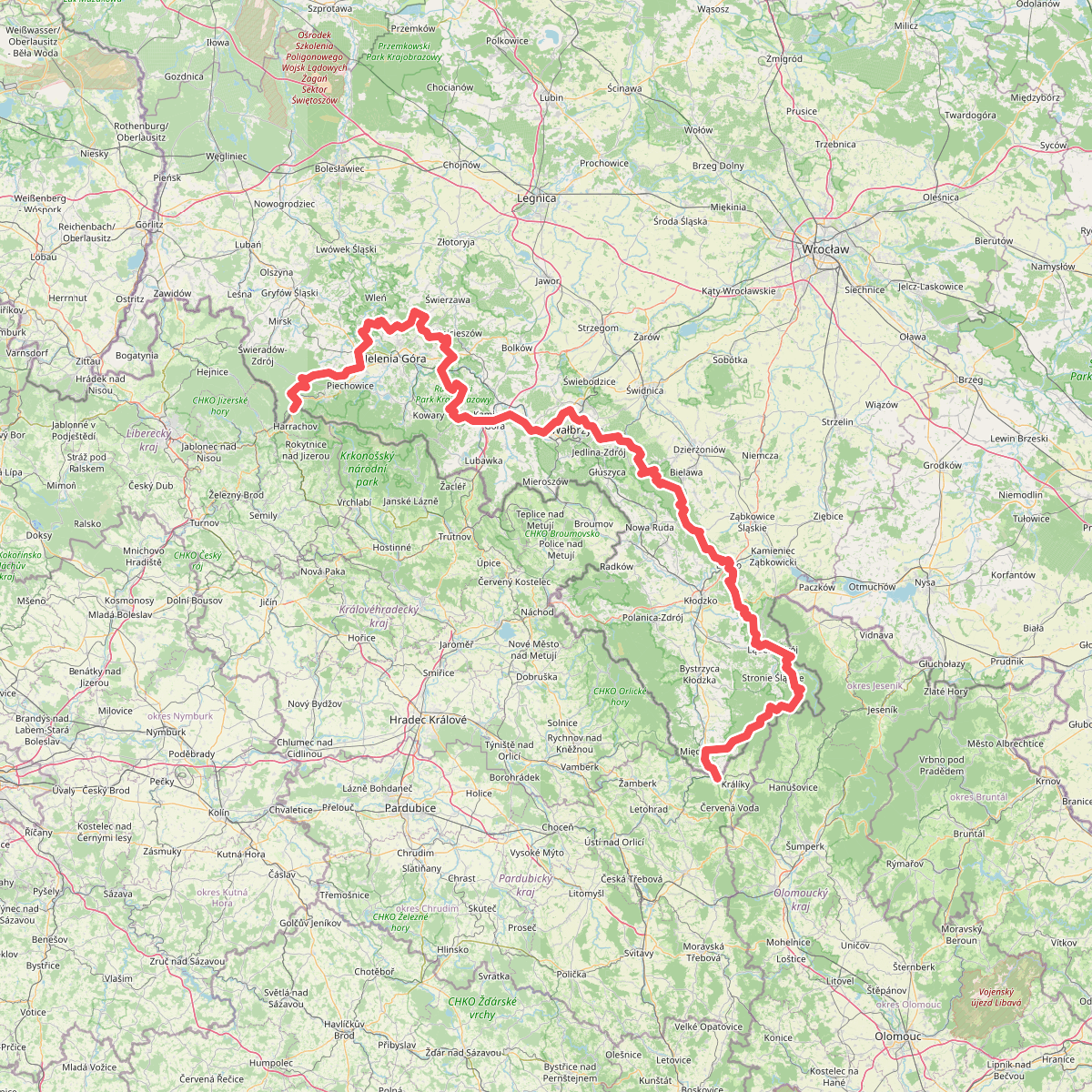
Discover the best walks in Góry Bardzkie. 2 routes on the map, with descriptions, photos and GPX.
About Góry Bardzkie
The Góry Bardzkie form a low, heavily forested barrier in the Sudeten range, bisected completely by the dramatic, winding gorge of the Nysa Kłodzka river. Unlike the rocky, exposed plateaus of the nearby Table Mountains, this area is characterized by rounded, densely wooded ridges where spruce and beech trees dominate the canopy. The terrain is defined by steep, short climbs and narrow ravines rather than expansive alpine meadows, meaning your views are mostly framed by dense foliage until you reach specific clearings or the chapel-crowned summit of Kalwaria.
Read more
About Góry Bardzkie
The Góry Bardzkie form a low, heavily forested barrier in the Sudeten range, bisected completely by the dramatic, winding gorge of the Nysa Kłodzka river. Unlike the rocky, exposed plateaus of the nearby Table Mountains, this area is characterized by rounded, densely wooded ridges where spruce and beech trees dominate the canopy. The terrain is defined by steep, short climbs and narrow ravines rather than expansive alpine meadows, meaning your views are mostly framed by dense foliage until you reach specific clearings or the chapel-crowned summit of Kalwaria.
Read moreThe Góry Bardzkie form a low, heavily forested barrier in the Sudeten range, bisected completely by the dramatic, winding gorge of the Nysa Kłodzka river. Unlike the rocky, exposed plateaus of the nearby Table Mountains, this area is characterized by rounded, densely wooded ridges where spruce and beech trees dominate the canopy. The terrain is defined by steep, short climbs and narrow ravines rather than expansive alpine meadows, meaning your views are mostly framed by dense foliage until you reach specific clearings or the chapel-crowned summit of Kalwaria.
Underfoot, the paths are predominantly packed dirt, forest loam, and loose slate gravel, which can feel slick on steeper descents. The trail network relies on traditional forestry tracks and marked hiking paths rather than modern boardwalks or paved promenades. Walking here feels enclosed and intimate, with the constant sound of small streams cutting through the damp ravines, especially on the northern slopes where the forest floor remains shaded and covered in thick moss.
In late October, the beech forests turn a deep copper color, making this the most distinctive time to observe the transition between the dark coniferous plantations and the native deciduous woods. While the main trail leading from the town of Bardo to the mountain chapel attracts regular local walkers, the secondary paths running along the ridge toward Kłodzka Góra are generally much quieter. This is a landscape for those who prefer quiet, enclosed woodland hiking over high-altitude scrambling.