The best hiking routes in Duna-Ipoly Nemzeti Park
Discover the best walks in Duna-Ipoly Nemzeti Park. 4 routes on the map, with descriptions, photos and GPX.
Managed by Duna-Ipoly Nemzeti Park Igazgatóság
About Duna-Ipoly Nemzeti Park
Duna-Ipoly Nemzeti Park spans the sharp bend of the Danube River and the volcanic hills rising directly from its banks. Unlike the flat plains of southern Hungary, this park is defined by steep, forested slopes, narrow valleys, and limestone plateaus. Walkers will find a distinct contrast between the damp, shaded beech forests of the Börzsöny hills and the dry, rocky grasslands of the Pilis range, where scrubby oaks and exposed white limestone dominate the ridges.
Read more
About Duna-Ipoly Nemzeti Park
Duna-Ipoly Nemzeti Park spans the sharp bend of the Danube River and the volcanic hills rising directly from its banks. Unlike the flat plains of southern Hungary, this park is defined by steep, forested slopes, narrow valleys, and limestone plateaus. Walkers will find a distinct contrast between the damp, shaded beech forests of the Börzsöny hills and the dry, rocky grasslands of the Pilis range, where scrubby oaks and exposed white limestone dominate the ridges.
Read moreDuna-Ipoly Nemzeti Park spans the sharp bend of the Danube River and the volcanic hills rising directly from its banks. Unlike the flat plains of southern Hungary, this park is defined by steep, forested slopes, narrow valleys, and limestone plateaus. Walkers will find a distinct contrast between the damp, shaded beech forests of the Börzsöny hills and the dry, rocky grasslands of the Pilis range, where scrubby oaks and exposed white limestone dominate the ridges.
Underfoot, the trails vary from soft, leaf-littered soil under dense canopy to loose volcanic gravel and rocky limestone paths that require careful stepping. The Danube itself shapes the lower elevations, where river-gravel beaches and muddy floodplain forests of willow and alder line the water. In the higher sections, the terrain is characterized by deep ravines and occasional caves, offering rugged climbs rather than gentle, rolling meadows.
In October, the deciduous canopy turns deep yellow and red, making the forested ridges particularly striking. While popular trailheads near Visegrád and the Ram-szakadék gorge attract large numbers of weekend visitors, the deeper interior of the Börzsöny remains much quieter, offering a more solitary experience among the volcanic peaks.
Hiking routes in Duna-Ipoly Nemzeti Park (4)
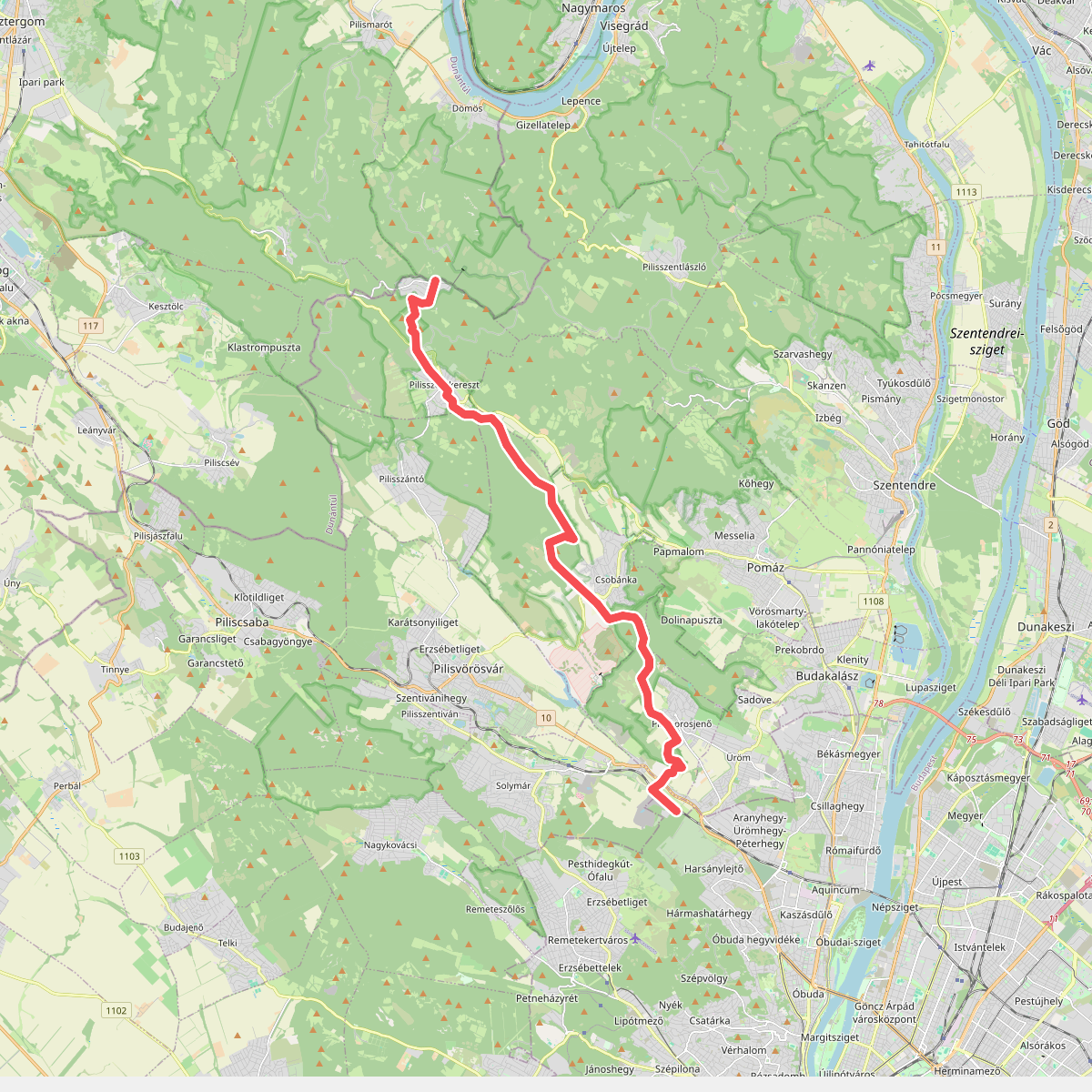
#1. K, OKT 15. (Rozália téglagyár – Pilisszentkereszt – Dobogókő)
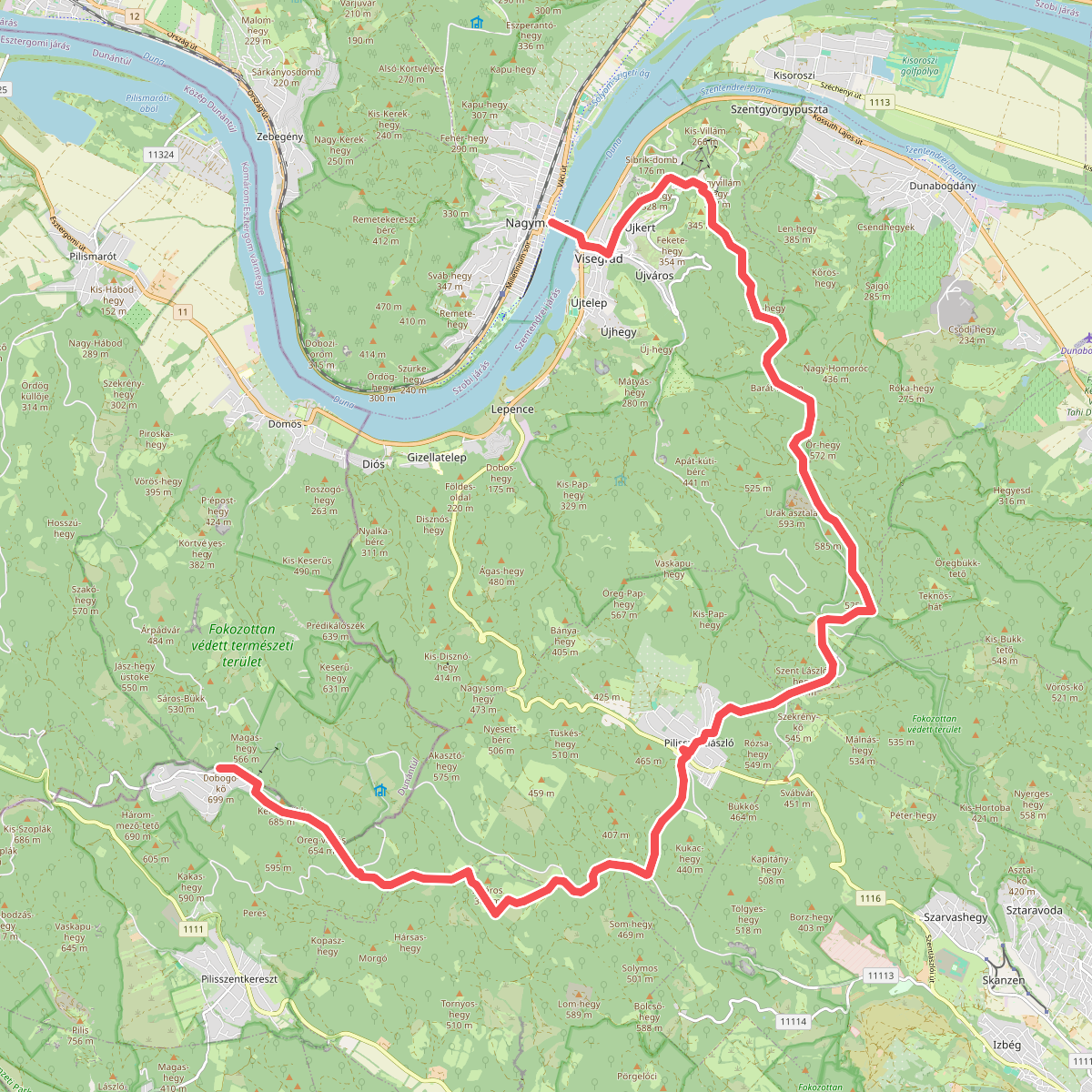
#2. K, OKT 16. (Dobogókő – Pilisszentlászló – Visegrád – Nagymaros, visegrádi rév)
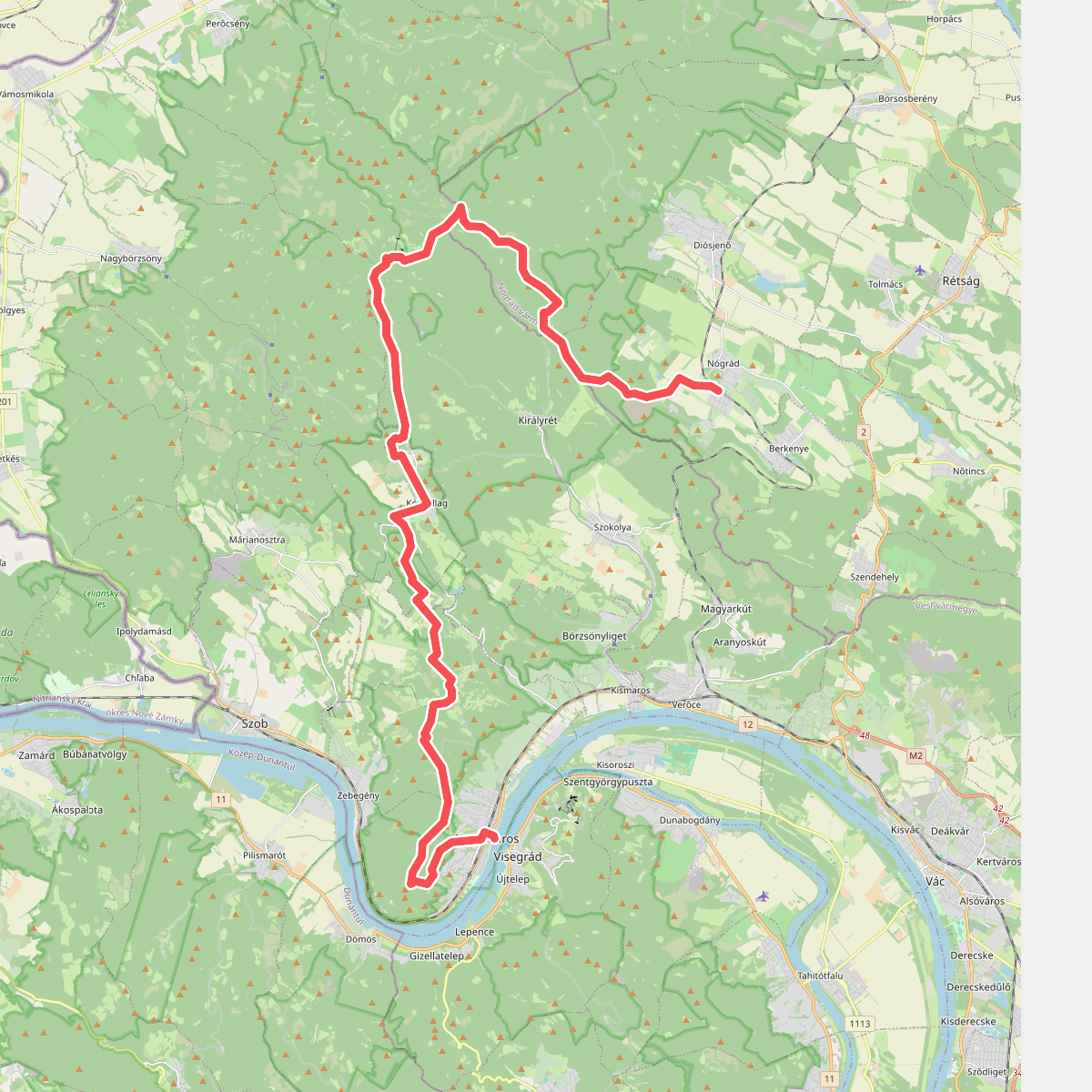
#3. K, OKT 17. (Nagymaros – Nógrád)