
The best hiking routes in Bükki Nemzeti Park
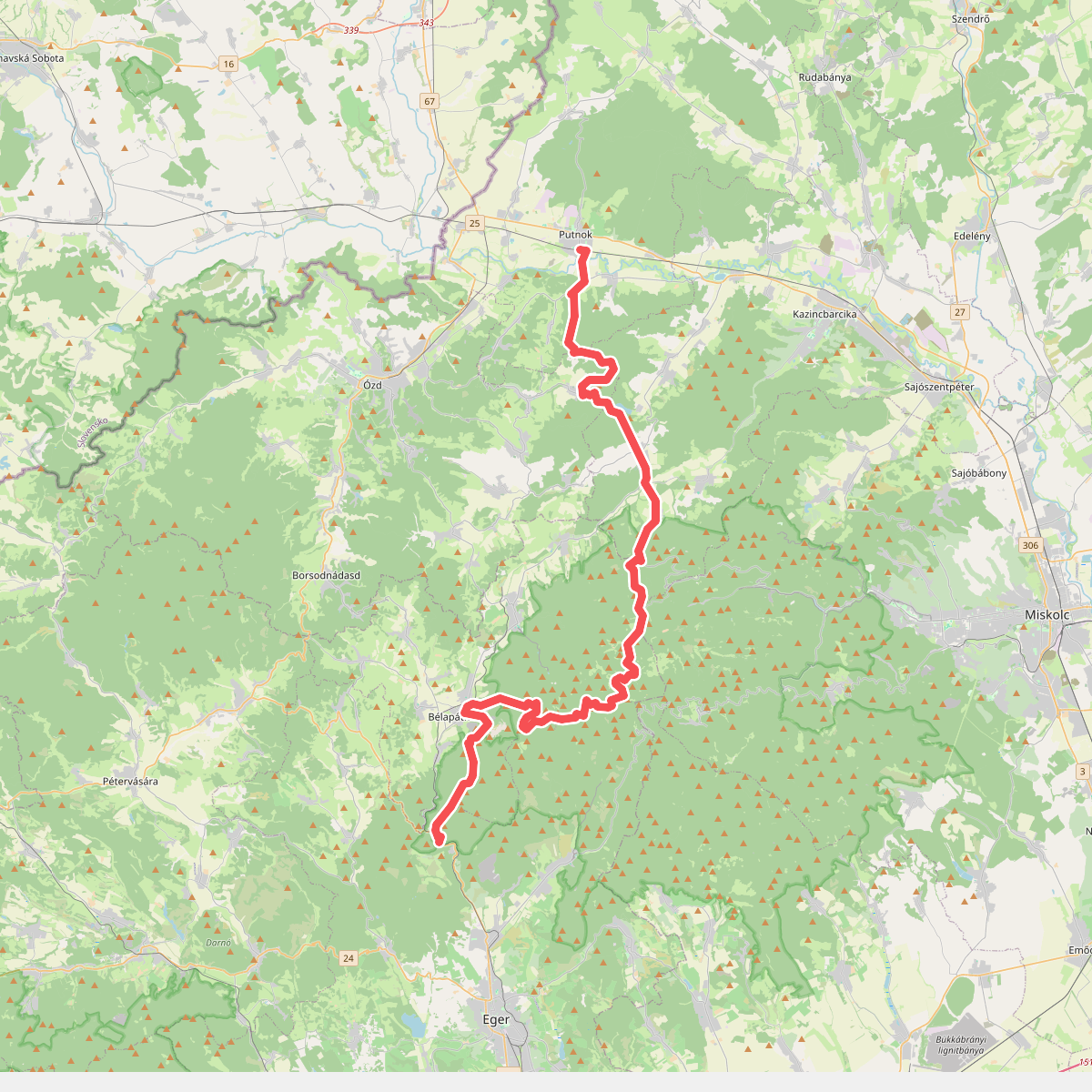
Discover the best walks in Bükki Nemzeti Park. 2 routes on the map, with descriptions, photos and GPX.
About Bükki Nemzeti Park
Bükki Nemzeti Park is a heavily forested karst plateau in northern Hungary, defined by its limestone geology rather than high, jagged peaks. Walkers will find a landscape of deep sinkholes, steep-sided ravines, and extensive beech forests that block out much of the light in summer. Unlike the volcanic hills nearby, this area is dry on the surface because water quickly drains through the porous rock, meaning you will not cross many streams on the high plateau. Instead, the water emerges at the base of the hills in limestone springs.
Read more
About Bükki Nemzeti Park
Bükki Nemzeti Park is a heavily forested karst plateau in northern Hungary, defined by its limestone geology rather than high, jagged peaks. Walkers will find a landscape of deep sinkholes, steep-sided ravines, and extensive beech forests that block out much of the light in summer. Unlike the volcanic hills nearby, this area is dry on the surface because water quickly drains through the porous rock, meaning you will not cross many streams on the high plateau. Instead, the water emerges at the base of the hills in limestone springs.
Read moreBükki Nemzeti Park is a heavily forested karst plateau in northern Hungary, defined by its limestone geology rather than high, jagged peaks. Walkers will find a landscape of deep sinkholes, steep-sided ravines, and extensive beech forests that block out much of the light in summer. Unlike the volcanic hills nearby, this area is dry on the surface because water quickly drains through the porous rock, meaning you will not cross many streams on the high plateau. Instead, the water emerges at the base of the hills in limestone springs.
Underfoot, the trails alternate between rocky limestone paths, loose scree in the steeper valleys, and soft forest soil covered in leaf litter. The terrain is hilly and requires steady footwork, especially where exposed tree roots and limestone rocks cross the path. In late spring, around May, the forest floor is covered in wild garlic, while autumn brings a thick carpet of beech leaves that can obscure the rocky ground beneath.
While the deep forests offer a closed, shaded environment, the plateau is cleared in places by mountain meadows known as bükki fénsík. These open grassy areas provide a contrast to the dense tree cover and are marked by classic karst depressions. The park is well-marked with a dense network of signposted paths, though the steep climbs out of the valleys require a basic level of fitness.