
The best hiking routes in Barranco de la Virgen
Discover the best walks in Barranco de la Virgen. 2 routes on the map, with descriptions, photos and GPX.
About Barranco de la Virgen
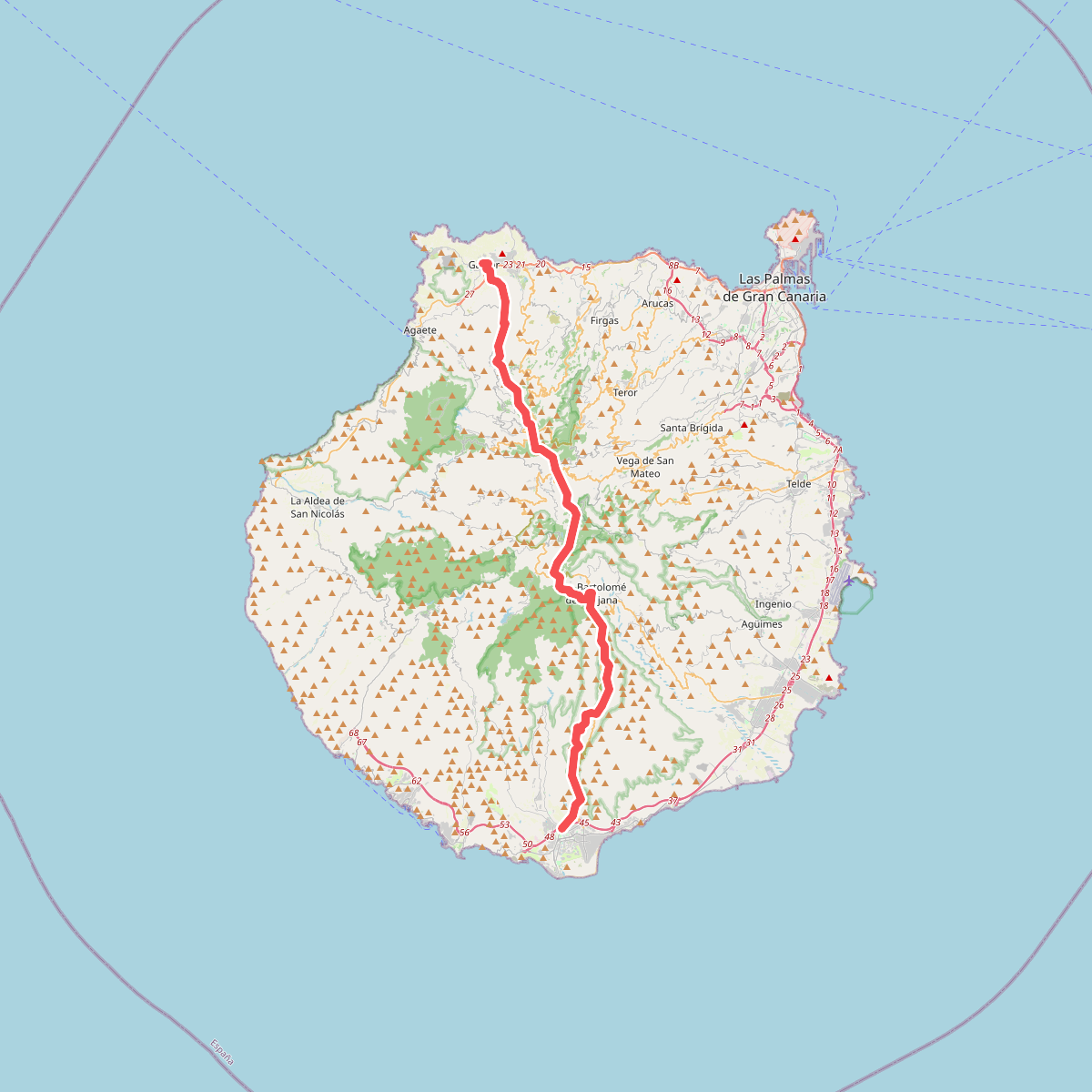
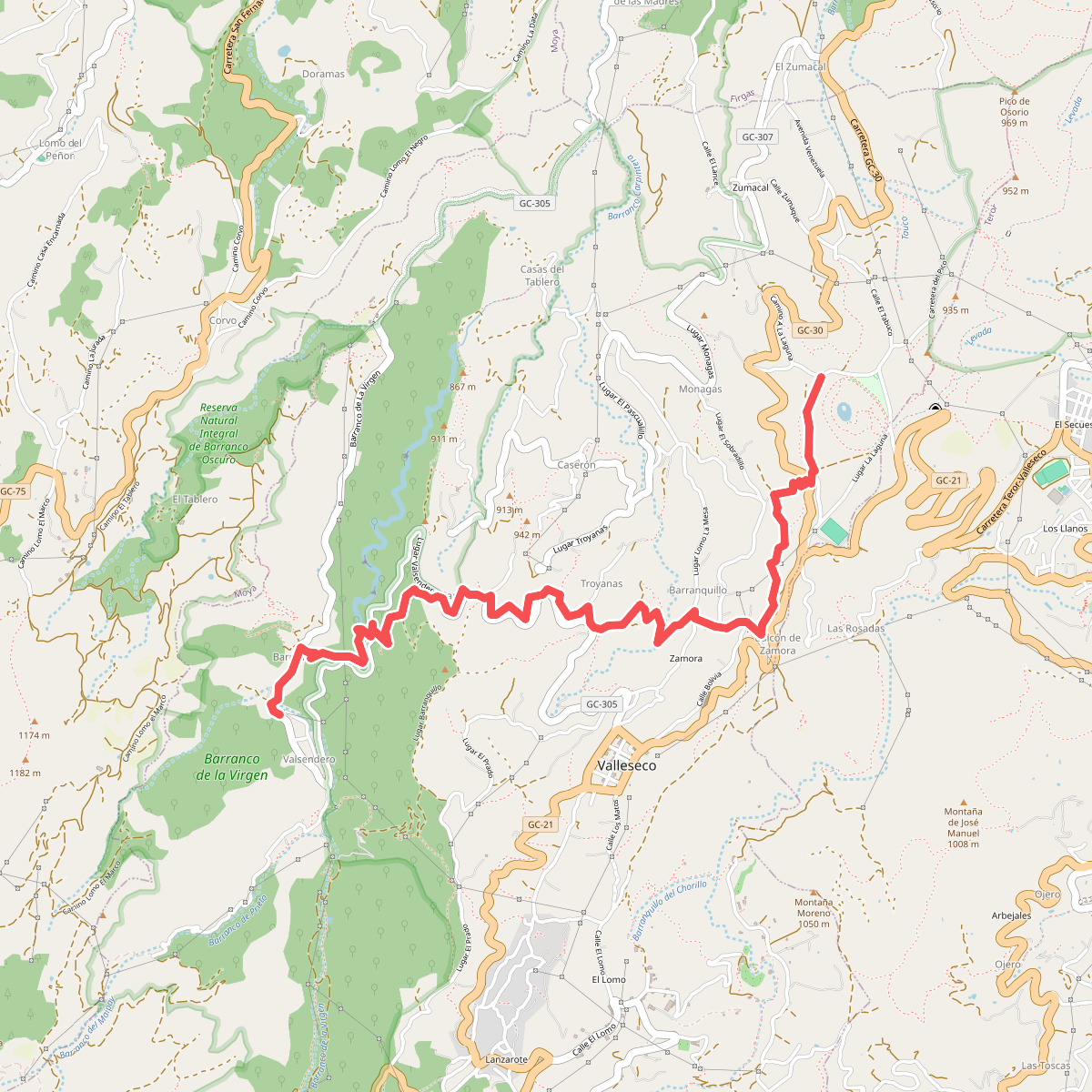
Barranco de la Virgen is a deep, steep-sided ravine in the northern highlands of Gran Canaria, characterized by its humid microclimate and remnants of ancient laurel forest. Unlike the arid, pine-dominated slopes found in the south of the island, this area is defined by dense, moisture-loving vegetation, sheer basalt cliffs, and agricultural terraces carved into the hillsides. The landscape is a direct result of the trade winds pushing clouds against the northern slopes, creating a damp environment where ferns, mosses, and endemic plants thrive along the valley floor.
Read more
About Barranco de la Virgen
Barranco de la Virgen is a deep, steep-sided ravine in the northern highlands of Gran Canaria, characterized by its humid microclimate and remnants of ancient laurel forest. Unlike the arid, pine-dominated slopes found in the south of the island, this area is defined by dense, moisture-loving vegetation, sheer basalt cliffs, and agricultural terraces carved into the hillsides. The landscape is a direct result of the trade winds pushing clouds against the northern slopes, creating a damp environment where ferns, mosses, and endemic plants thrive along the valley floor.
Read moreBarranco de la Virgen is a deep, steep-sided ravine in the northern highlands of Gran Canaria, characterized by its humid microclimate and remnants of ancient laurel forest. Unlike the arid, pine-dominated slopes found in the south of the island, this area is defined by dense, moisture-loving vegetation, sheer basalt cliffs, and agricultural terraces carved into the hillsides. The landscape is a direct result of the trade winds pushing clouds against the northern slopes, creating a damp environment where ferns, mosses, and endemic plants thrive along the valley floor.
Underfoot, walkers will find a mix of damp earth, stone-paved historical paths, and occasional concrete tracks connecting small hamlets. The terrain is steep, requiring steady footwork on ascents and descents, with narrow paths that hug the ravine walls rather than wide, flat forest tracks. Water often trickles along the irrigation channels, known as acequias, which run parallel to the walking routes.
This is a working rural landscape where wild, overgrown sections of laurel and willow stand alongside smallholdings growing potatoes and fruit trees. It does not offer wide, panoramic views of the ocean, but rather an intimate, enclosed experience within the shadows of the ravine. The valley floor is often quieter than the busy coastal routes, though the sound of running water and birdsong is constant.